First Language Acquisition: The Fundamentals Explained
There is nothing quite as fascinating as watching a toddler navigate the chaotic world of words. One moment they are babling nonsense, and the next, they are constructing complex sentences about breakfast. This rapid transformation is the core of first language acquisition, a process that linguists, psychologists, and parents have studied for decades. It is not merely about memorizing vocabulary; it is about unlocking the intricate rules of grammar, social interaction, and abstract thought.
If you have ever wondered how babies go from crying to conversing, you are diving into one of the most complex feats of human development. It happens largely without formal instruction, driven by a combination of biological readiness and environmental interaction. Understanding the mechanics behind this process can offer profound insights into how the human brain works, why we learn differently as adults, and what makes our communication uniquely powerful.
The Critical Period Hypothesis
One of the most enduring concepts in linguistics is the "critical period." This theory suggests that there is a specific window of time, usually ending around puberty, during which the brain is exceptionally plastic and receptive to language input. Before this window closes, children can absorb phonemes, grammar structures, and idiomatic expressions with effortless ease. Afterward, acquiring a native-like accent or intuitive grasp of complex syntax becomes significantly harder, if not impossible.
This biological imperative explains why a child exposed to two languages from birth will become fluent in both, while an adult learning a second language often struggles with perfect pronunciation or grammatical intuition. The neural pathways for language are being wired during these early years. If the brain does not receive sufficient linguistic stimulation during this critical period, the opportunity for full acquisition may be permanently altered. Cases of extreme isolation in childhood, though rare, demonstrate that missing this window can result in permanent deficits in linguistic capability.
From Babbling to Morphemes
The journey does not start with coherent speech. It begins with
- Cooing: Early vowel sounds that indicate vocal play and social engagement.
- Babbling: Repetitive consonant-vowel combinations like "ba-ba" or "da-da," which mimic the rhythmic structure of the native language.
- Jargon: Strings of sounds that resemble speech patterns but lack meaningful words.
Around twelve months, most children produce their first "holophrastic" utterance—a single word used to convey a complex idea. For example, saying "milk" might mean, "I am thirsty," "There is milk in that cup," or "I drank all the milk." This is the seed of syntax.
Soon after, the "two-word stage" emerges. Children begin combining words to express relationships, such as "more juice" or "daddy go." These telegraphic sentences strip away grammatical markers like prepositions or articles, focusing only on the core meaning. Despite their simplicity, these phrases reveal that the child is already understanding grammatical categories like nouns and verbs. They are experimenting with the rules of their language, often overgeneralizing patterns. A common example is saying "goed" instead of "went," showing that the child understands the concept of past tense markers, even if they apply the rule incorrectly at first.
Nurture vs. Nature in Language Learning
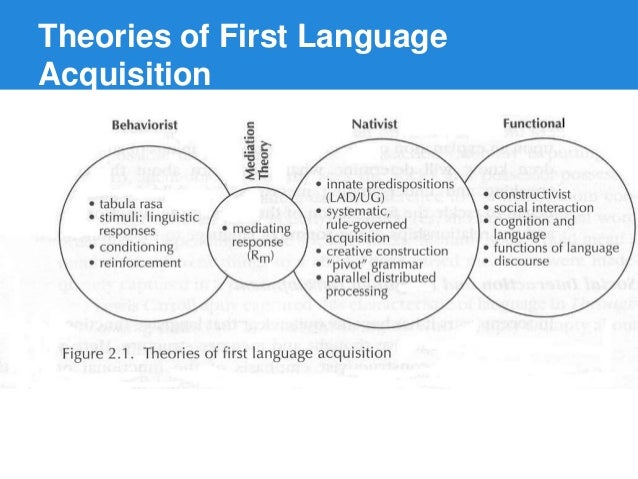
For a long time, scholars debated whether language acquisition was purely a product of environmental conditioning or an innate biological trait. Today, the consensus lies in a rich interplay of both. On one side, you have the environmental input. Children need to hear language to learn it. The quality and quantity of speech directed at a child, often called "child-directed speech" or "motherese," play a crucial role. This simplified, high-pitched, and repetitive speech helps segment the continuous stream of sound into distinct words and grammatical units.
On the other side is the biological predisposition. Noam Chomsky famously argued that humans are born with a "Universal Grammar," a mental blueprint that allows us to recognize linguistic structures across all human languages. While modern neuroscience complicates this view by emphasizing statistical learning and neural plasticity, the core idea remains: humans are hardwired to look for patterns in sound. We do not just absorb language like a sponge absorbs water; we actively construct it, testing hypotheses and refining our understanding based on feedback.
The Social Interactionist Perspective
Beyond biology and input, language is inherently social. Children learn to language to communicate needs, desires, and social bonds. Vygotsky’s social constructivism highlights that language development occurs through interaction with more knowledgeable others. When a parent expands on a child’s utterance—turning "Doggy run" into "Yes, the doggy is running"—they provide a scaffolding that helps the child bridge the gap between their current ability and linguistic competence. This reciprocal interaction is vital. Language is not just a code to be cracked; it is a tool for connection.
Common Milestones and Variations
While every child is unique, there are general milestones that caregivers can expect. By eighteen months, a typical vocabulary is around fifty words. By two years, this often explodes to several hundred. However, variation is normal. Some children are "early talkers," dominating social situations with words, while others are "late bloomers," preferring to observe and listen before speaking.
Parents often worry if their child is ahead or behind. It is important to remember that comprehension usually precedes production. A child who does not speak much may still understand a significant portion of what is said to them. True delays are often signaled by a lack of response to sounds, no joint attention (looking where a parent points), or a plateau in vocabulary growth after age two. In such cases, professional evaluation is recommended, but for most, patience and consistent engagement are the best strategies.
Frequently Asked Questions
Do bilingual children confuse their languages?
It is common for bilingual children to mix languages in a single sentence, a phenomenon known as code-switching. However, research suggests this is not confusion. Instead, it is a sophisticated communicative strategy. They often understand the distinct rules of both languages and choose words based on context, audience, or availability. Most studies indicate that bilingual acquisition follows the same timeline as monolingual acquisition, just distributed across two vocabularies.
How does screen time affect language acquisition?
Passive screen time, such as watching educational shows alone, has limited impact on early language development. Language is largely learned through interactive, responsive communication. Toddlers learn best when they can hear a word, see the speaker’s face, and receive immediate feedback or reinforcement. Interactive video calls with family members can be beneficial, but solitary screen exposure is generally less effective than real-world interaction.
When should I seek help for speech delays?
If a child is not babbling by twelve months, not using single words by sixteen months, or not using two-word phrases by twenty-four months, it is wise to consult a pediatrician or speech-language pathologist. Early intervention is highly effective. Additionally, if a child loses previously acquired language skills at any age, immediate medical attention is necessary, as this can signal underlying neurological or developmental issues.
Does reading to a baby accelerate language growth?
Yes, consistently. Reading exposes children to a richer vocabulary and more complex sentence structures than everyday conversation. It also teaches them about narrative structure, turn-taking, and the mechanics of print. Even if the infant does not understand the words, the ritual of shared attention and the exposure to the rhythm of language lay the groundwork for future literacy and linguistic competence.