Your Complete Guide to Health Information Exchanges
What Is a Health Information Exchange (HIE)?
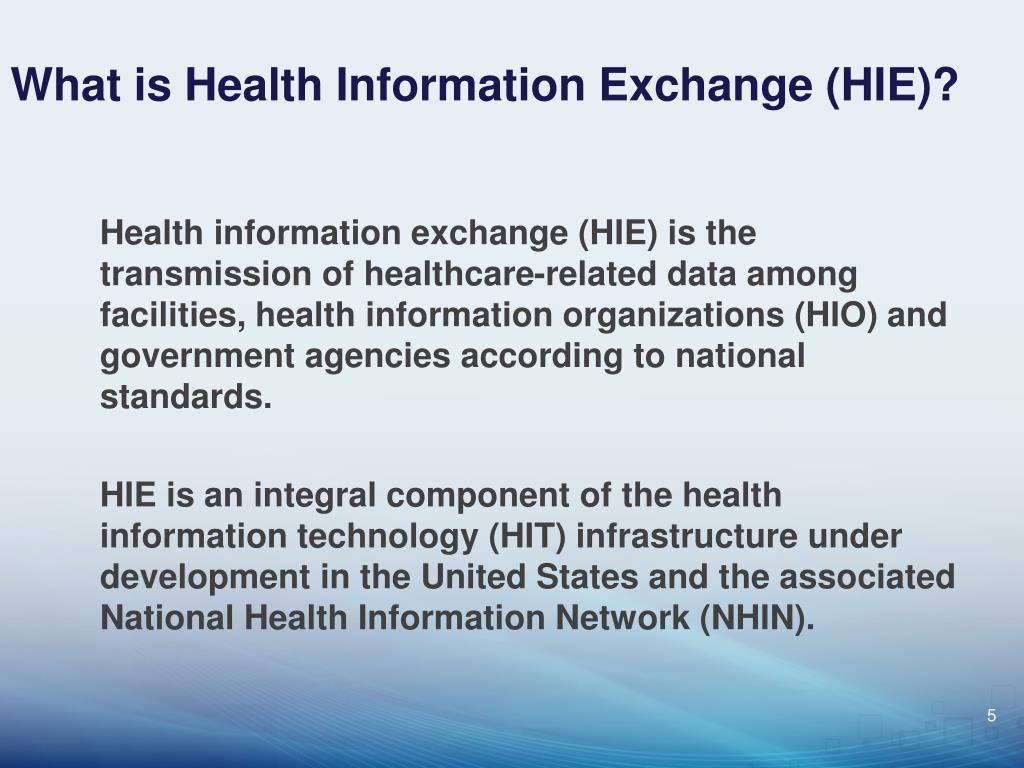
In plain terms, a Health Information Exchange is a network that lets clinicians, hospitals, labs, and other care providers share patient data electronically. The goal is simple: when a patient moves from a primary‑care office to an emergency department, the new team should see the same lab results, medication list, and recent diagnoses that the original provider recorded. By linking otherwise isolated electronic health record (EHR) systems, HIEs reduce duplicate testing, cut down paperwork, and help keep treatment decisions consistent.
How Does an HIE Work?
Most HIEs use a “hub‑and‑spoke” architecture. The hub—a central server or cloud platform—stores a standardized snapshot of each patient’s record. Individual “spokes,” such as a clinic’s EHR, send data to the hub whenever a change occurs and query the hub when they need information. Data exchange relies on nationally recognized standards like HL7 and, increasingly, FHIR (Fast Healthcare Interoperability Resources). These standards translate the many proprietary formats into a common language that all participants can read.
Key Benefits for Patients and Providers
- Improved clinical outcomes – Access to recent labs or imaging reduces the chance of missed diagnoses.
- Faster care coordination – Specialists can see a patient’s full medication list, preventing harmful drug interactions.
- Cost savings – Eliminating unnecessary repeat tests can save hospitals millions each year.
- Enhanced patient engagement – Many HIEs offer portals where individuals can view and download their own records.
Common Challenges to Keep in Mind
- Privacy and security – Even with encryption and audit trails, sharing data across multiple entities raises concerns about unauthorized access.
- Interoperability gaps – Not every EHR vendor fully supports the latest standards, leading to occasional “data drop‑outs.”
- Funding and sustainability – Building and maintaining an HIE requires upfront capital and ongoing operational budgets, which can be hard for smaller health systems.
- Legal and consent issues – State laws differ on how patients can opt‑in or opt‑out of data sharing, adding a layer of administrative complexity.
Types of Health Information Exchanges
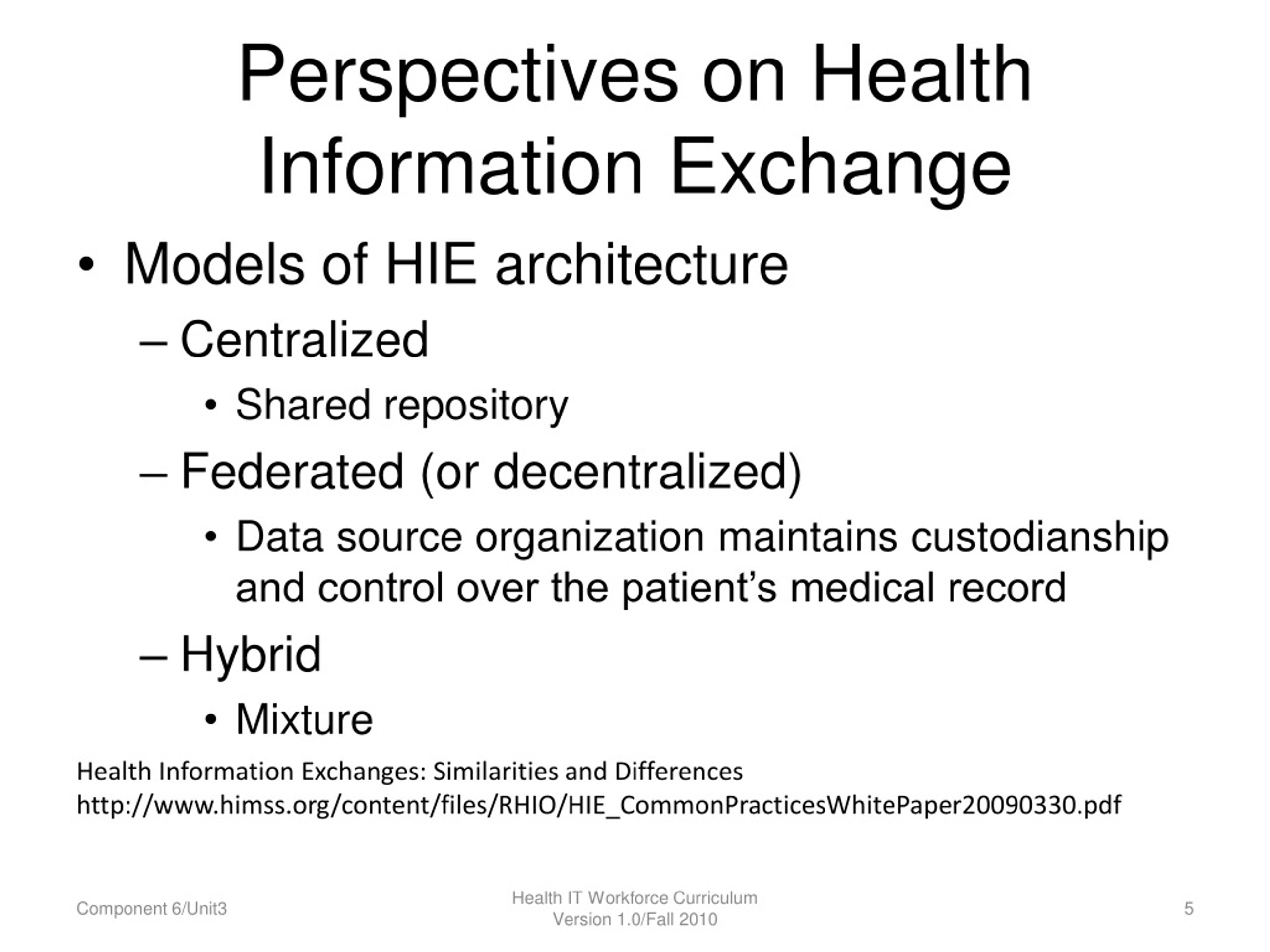
HIEs aren’t one‑size‑fits‑all. Three models dominate the landscape:
Direct exchange
This is a point‑to‑point, encrypted email‑like transmission of documents. It’s reliable for sending a single referral or discharge summary but doesn’t support real‑time queries.
Query‑based exchange
When a clinician needs a patient’s history, the EHR sends a request to the hub, which returns any matching records. This model underpins most “look‑up” functions you see in modern hospitals.
Consumer‑mediated exchange
Patients themselves become the conduit, using mobile apps or patient portals to pull data from the HIE and share it with new providers. This approach aligns with the growing emphasis on patient‑centered care.
Steps to Implement an HIE in Your Organization
- Assess readiness – Review existing EHR capabilities, staff expertise, and legal frameworks.
- Select a governance model – Decide whether you’ll join a regional HIE, build a private network, or adopt a hybrid approach.
- Adopt standards early – Implement FHIR APIs and HL7 messaging to minimize future translation work.
- Pilot with a small cohort – Start with a single department or specialty to troubleshoot workflow issues.
- Scale and monitor – Expand participation gradually, while tracking metrics like data latency, error rates, and user satisfaction.
Future Trends Shaping Health Information Exchanges
Artificial intelligence is beginning to surface in HIEs, primarily as a tool that flags inconsistent medication lists or predicts readmission risk based on aggregated data. Meanwhile, the nationwide push toward nationwide interoperability—spurred by recent CMS rules—means more states are mandating that HIEs adopt FHIR‑based APIs. As patient‑generated health data (wearables, home monitoring) becomes richer, HIEs will likely evolve into broader health data ecosystems, blurring the line between clinical records and everyday wellness metrics.
FAQ
- What kinds of data can be shared through an HIE? Typically, labs, radiology reports, medication lists, allergies, immunizations, and discharge summaries are exchanged. Some HIEs also support clinical notes and even limited imaging thumbnails.
- Do patients have control over their information? Yes. Most HIEs provide an opt‑out mechanism, and many now let individuals set granular preferences—such as allowing data sharing for emergency care but not for marketing.
- Is participating in an HIE expensive for small practices? Initial costs can be a hurdle, but many regional HIEs offer tiered pricing or grant‑backed subsidies. In the long run, the reduction in duplicate tests and paperwork often offsets the expense.