When Sulfuric Acid Meets Aluminum: What Actually Happens
Aluminum’s natural defense
Pure aluminum looks shiny, but its surface is hardly ever bare metal. Almost instantly, it forms a thin oxide layer—aluminum oxide—that acts like a protective skin. This passivation is why the metal tolerates water, mild acids, and even some bases without corroding noticeably.
The oxide film is only a few nanometers thick, yet it blocks most chemical attacks. If the film stays intact, the underlying metal remains largely untouched. However, once the barrier is breached—by abrasion, high temperature, or a particularly aggressive reagent—the real chemistry begins.
How sulfuric acid attacks aluminum
Sulfuric acid (H₂SO₄) is a strong, non‑oxidizing acid. Its behavior toward aluminum depends heavily on concentration and temperature.
- Dilute acid (below 10 %): The oxide layer usually survives long enough that the reaction proceeds very slowly. You might see a faint fizz as a few hydrogen atoms are liberated, but the metal’s appearance stays largely the same.
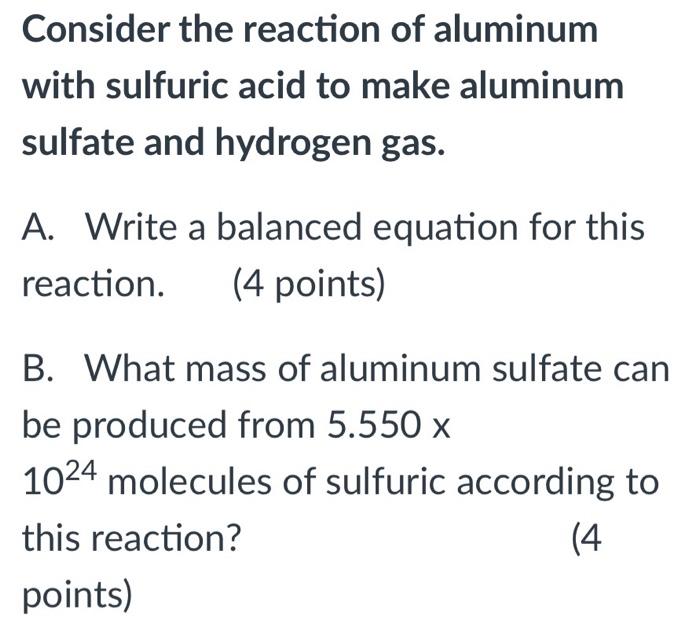
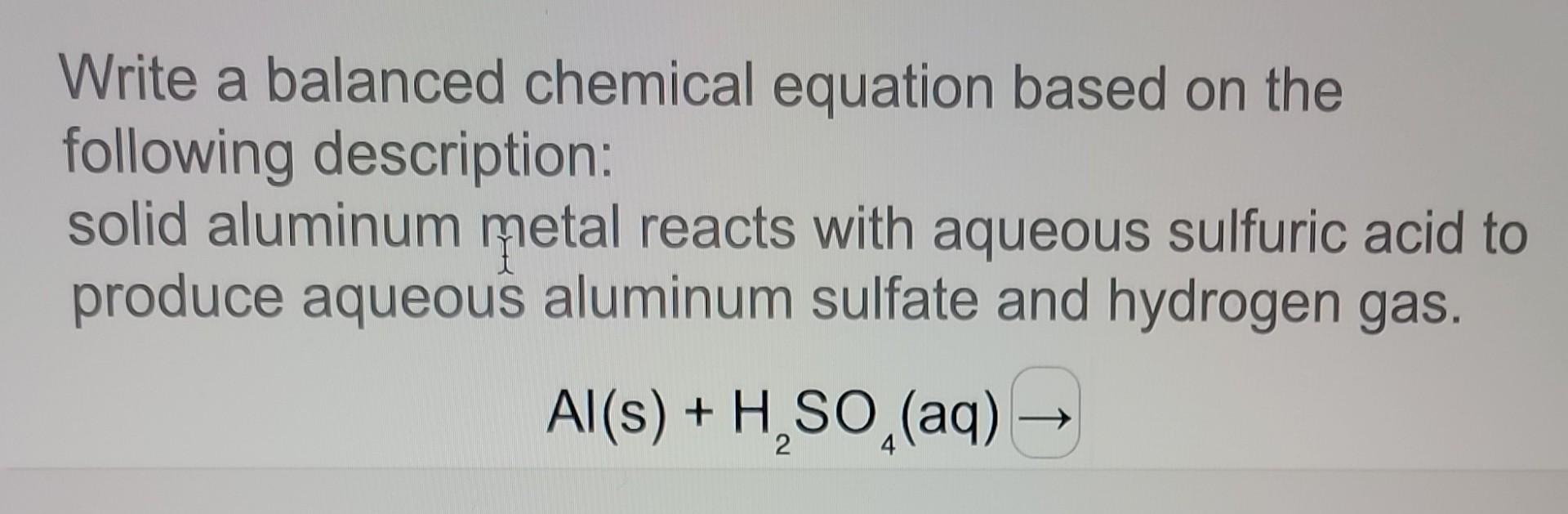
- Moderately concentrated acid (10‑30 %): The acid begins to dissolve the oxide film, exposing fresh aluminum. Once exposed, the metal reacts to form aluminum sulfate (Al₂(SO₄)₃) and hydrogen gas:
2 Al + 3 H₂SO₄ → Al₂(SO₄)₃ + 3 H₂↑
The bubbling you observe is hydrogen, and the solution gradually turns cloudy as aluminum sulfate dissolves.
- Concentrated acid (above 70 %): The reaction accelerates dramatically. The high acidity and the presence of water molecules in the acid break down the oxide film almost instantly, leading to vigorous hydrogen evolution. If the metal is heated, the reaction can become explosive, especially if the acid is near its boiling point.
In all cases, the net result is the same: aluminum converts into a soluble sulfate while hydrogen gas escapes. The speed and visibility of the process are what change.
Why the reaction isn’t always as dramatic as you might expect
Many people picture a spectacular fizz when any acid meets metal, but with aluminum the reality can be more subdued. The oxide layer’s protective power means that, unless the acid is strong enough to breach it, the metal may appear inert. That’s why a drop of household vinegar (a weak acetic acid) seems harmless on aluminum foil, yet the same foil will react furiously if you dunk it into hot, concentrated sulfuric acid.
Temperature plays a crucial role, too. Raising the temperature increases the kinetic energy of the molecules, making it easier for the acid to dissolve the oxide layer and for the underlying metal to engage in the redox process. That’s why industrial processes that dissolve aluminum often heat the acid to around 60–80 °C.
Safety first: handling the reaction responsibly
If you ever need to work with sulfuric acid and aluminum, treat the combination as potentially hazardous.
- Always wear chemical‑resistant gloves, goggles, and a lab coat.
- Conduct the experiment in a well‑ventilated area or under a fume hood; hydrogen gas is flammable.
- Never add water to concentrated acid—always add acid to water if dilution is required.
- Keep a Class D fire extinguisher nearby; while the reaction itself isn’t a fire risk, hydrogen can ignite if an ignition source is present.
Even a small spill can produce enough hydrogen to create an explosive mixture in a confined space. Promptly neutralize any excess acid with a weak base (like sodium bicarbonate) before disposal, following local regulations.
Practical uses of the aluminum‑sulfuric acid reaction
Although the reaction can be dangerous, it’s also useful in several industrial contexts.
- Aluminum extraction: In the Bayer process, a variation of this chemistry helps dissolve alumina from bauxite, though the actual reagent is sodium hydroxide rather than sulfuric acid.
- Metal surface cleaning: Controlled exposure to dilute sulfuric acid can strip stubborn oxides or scale from aluminum parts before re‑anodizing.
- Hydrogen generation: Small‑scale labs sometimes use the reaction to produce hydrogen on demand, especially when a clean, carbon‑free gas is needed.
In each case, the key is to manage concentration, temperature, and exposure time so that the reaction proceeds at a predictable rate.
FAQ
Will a drop of dilute sulfuric acid corrode aluminum quickly?
Usually not. In low concentrations the oxide layer slows the reaction, so you might see only a faint bubble after a prolonged period.
Can concentrated sulfuric acid melt aluminum?
Not directly. Sulfuric acid doesn’t melt aluminum; instead, it rapidly dissolves the metal into aluminum sulfate while releasing hydrogen gas. The metal disappears rather than turning into a molten pool.
Is the hydrogen produced safe to collect?
Hydrogen is highly flammable. If you plan to capture it, you need a closed system with proper venting and an ignition‑proof environment. Most hobbyist setups avoid collecting the gas altogether.
How does temperature affect the reaction speed?
Higher temperatures increase both the rate at which the oxide layer breaks down and the speed of the underlying chemical reaction, often turning a slow fizz into a vigorous boil.