Timbre: How Sound Wave Shapes Define Voice and Instrument Tone
When we listen to a song, we often focus on pitch and rhythm. Yet the true character of a note—whether it sounds warm, bright, or gritty—stems from its timbre. In the next few paragraphs, we’ll explore how the shape of a sound wave and its spectral content shape the unique tone of voices and instruments.
What Exactly Is Timbre?
Timbre, also called tone color, refers to the quality that lets us distinguish one instrument from another even when they play the same pitch. Think of a piano note versus a flute playing the same C; both share a fundamental frequency, but their timbre is instantly recognizable because of the way their waves are constructed.
The Physics Behind Wave Shape
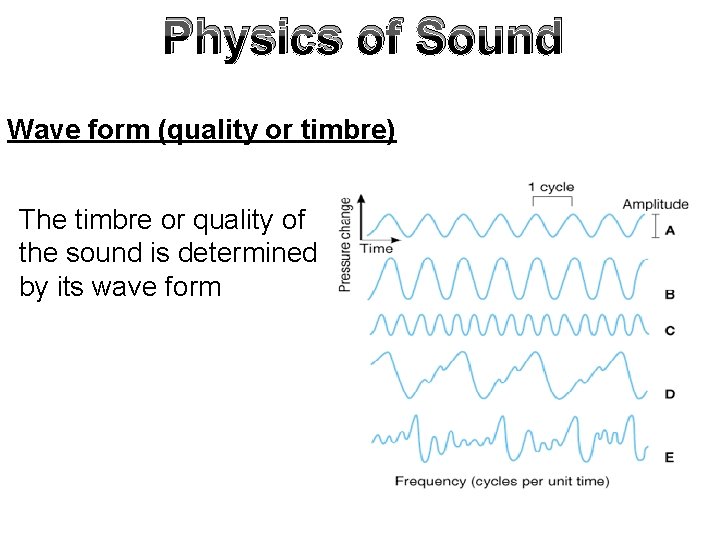
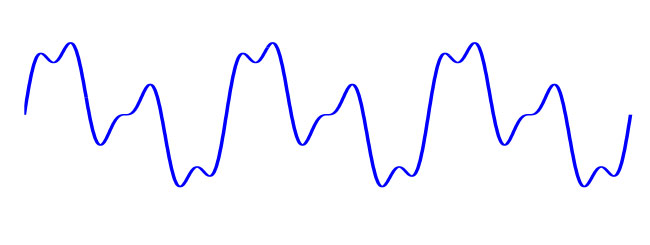
Every sound wave can be broken down into a fundamental frequency plus a series of overtones, or harmonics. The relative strength of these overtones—determined by the waveform’s shape—creates the spectral fingerprint of a tone.
Pure tones, like the ideal sine wave, contain only one frequency. Real instruments produce complex waves with many frequencies simultaneously. The arrangement of these frequencies, or spectral envelope, is what listeners pick up as timbre.
- Sine waves: smooth, pure, no timbre beyond pitch.
- Square waves: contain odd harmonics; perceived as bright and hollow.
- Sawtooth waves: rich in both odd and even harmonics; give a bright, metallic feel.
How Instruments Sculpt Their Timbre
Each instrument uses its construction to manipulate the harmonic series.
Wind instruments change timbre by altering embouchure, slide positions, or mouthpiece shape, which influences the pressure nodes along the air column.
Percussion relies on material density and resonant cavity. A wooden drum feels warm; a metal gong delivers a sharp, ringing tone because its surface vibrates in different modes.
Stringed instruments adjust timbre by altering where the string is pressed, the type of bowing, or the bridge height, all of which affect the vibration pattern and therefore the harmonic mix.
Vocal Timbre: A Living Instrument
The human voice is the most flexible timbral source. By shaping the vocal tract—tongue position, lip shape, and throat openness—singers control formants, the resonant peaks that define vowel sounds. A singer’s timbre changes dramatically when moving from a relaxed chest voice to a bright head voice.
Professional singers often train to broaden their dynamic range, enabling subtle timbral shifts that convey emotion without altering pitch.
Shaping Timbre with Technology
In modern music production, digital processors mimic physical wave shapes.
- Equalizers boost or cut specific frequency bands, reshaping the spectral envelope.
- Distortion and saturation add harmonics, giving a warmer or grittier sound.
- Modulation effects (chorus, phaser) create complex waveform interactions, enriching timbre.
Sampling and synthesis also use waveform shapes as building blocks. A synthesizer’s oscillator might output a sawtooth or triangle wave, and the sound engineer shapes it further with filters and envelopes.
Why Timbre Matters to Musicians and Listeners
Understanding timbre allows musicians to blend instruments effectively. A band mixing a bright trumpet with a mellow trombone can create a rich, layered texture by exploiting their contrasting harmonic content.
Listeners, often unconsciously, respond to timbre. A warm, resonant guitar can evoke intimacy, while a bright piano can feel uplifting. Producers use timbre to set mood and guide the emotional arc of a track.
Practical Tips for Musicians to Develop Timbre
- Experiment with attack and decay: Short, percussive attacks emphasize higher harmonics.
- Use the right technique: For wind players, alternate between half‑blowing and full blowing to shift timbre.
- Record in different spaces: Reverberation alters perceived timbre by adding low‑frequency resonances.
- Apply subtle EQ: A slight boost at 2–4 kHz can brighten a guitar without making it harsh.
FAQs About Timbre
What is the difference between tone and timbre?
Pitch or tone refers to the perceived frequency of a sound. Timbre is the characteristic that distinguishes sounds with the same pitch, such as a piano versus a violin playing the same note.
Can you change the timbre of an instrument after it’s built?
Yes. By altering playing technique, using mutes, or applying electronic effects, musicians can significantly shift an instrument’s timbre.
Is timbre the same for all instruments?
No. Each instrument’s physical design, materials, and playing method create a unique spectral signature.
How does the recording environment affect timbre?
Room acoustics add or dampen certain frequencies, thus modifying the overall spectral envelope of the recorded sound.