Oscillation Made Simple: A Quick, Comprehensive Guide
When a system swings back and forth—whether it’s a child on a swing, a guitar string vibrating, or a market price fluctuating—the underlying pattern is called oscillation. Grasping the basics doesn’t require a physics doctorate; a clear picture of the key ideas is enough to recognize oscillatory behavior in everyday life and in technical fields alike.
What Exactly Is Oscillation?
At its core, oscillation describes any repetitive motion around an equilibrium point. The motion can be mechanical, like a pendulum swinging, or non‑mechanical, such as the alternating current in a power line. The defining trait is that the system repeatedly departs from and returns to a central state, creating a cycle that can be measured and predicted.
Major Types of Oscillation
- Mechanical oscillation: springs, pendulums, and seismic waves belong here. These involve tangible masses moving through space.
- Electrical oscillation: alternating current (AC), LC circuits, and radio waves are classic examples where voltage or current varies sinusoidally.
- Biological and ecological oscillation: predator‑prey populations, heartbeats, and circadian rhythms all display regular cycles.
- Economic oscillation: business cycles and stock market indices often rise and fall in patterns that can be modeled similarly.
Key Parameters You’ll Meet Frequently
Every oscillating system can be described using a handful of universal quantities:
- Amplitude: the maximum displacement from equilibrium.
- Frequency (f): how many cycles occur per unit time, usually measured in hertz (Hz).
- Period (T): the time needed to complete one full cycle; it’s the reciprocal of frequency (T = 1/f).
- Phase: the position within the cycle at a given moment, often expressed in degrees or radians.
These parameters are interrelated, so changing one often influences the others. For instance, stiffening a spring typically raises the frequency while leaving the amplitude unchanged—if the initial energy stays the same.
Modeling Oscillation: From Simple Harmonic Motion to Complex Systems
The simplest mathematical representation is simple harmonic motion (SHM), where the restoring force is directly proportional to displacement. The classic equation — m·d²x/dt² + k·x = 0 — captures this relationship, yielding a sinusoidal solution:
x(t) = A cos(ωt + φ), where ω (angular frequency) equals √(k/m). This formula works well for small-angle pendulums, mass‑spring systems, and many electrical resonators.
When damping, driving forces, or nonlinearities enter the picture, the equations become richer. Damped oscillators add a term proportional to velocity, while driven oscillators include an external periodic force. In those cases, solutions may involve exponential decay, resonance peaks, or even chaotic behavior.
Real‑World Examples That Illustrate the Concept
Seeing oscillation in action helps cement the theory:
- Pendulum: A swinging clock’s pendulum traces a near‑sinusoidal path, its period depending on length, not mass.
- Electrical LC circuit: An inductor and capacitor store energy alternately in magnetic and electric fields, producing a clean sinusoidal voltage at a frequency set by 1/(2π√LC).
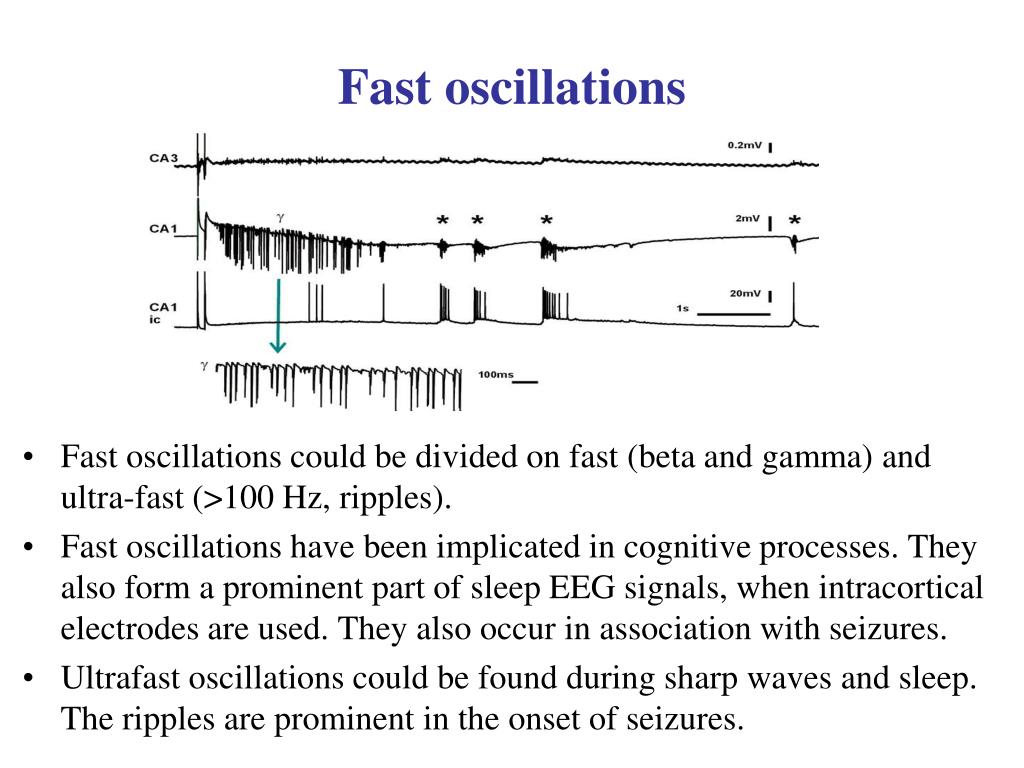
- Heart rhythm: The heart’s electrical system creates regular spikes that propagate as waves, driving the mechanical contraction we feel as a pulse.
- Seasonal climate patterns: Temperature and daylight length oscillate yearly, driven by Earth’s tilt and orbit.
Analyzing Oscillation: Tools and Techniques
To study an oscillating signal, you’ll often start with a time‑domain plot—amplitude versus time. From there, the fast Fourier transform (FFT) can reveal the dominant frequencies, turning the waveform into a spectrum. Engineers frequently use oscilloscopes for real‑time visualization, while biologists may record electrophysiological traces with a data acquisition system.
When dealing with noisy data, filtering out high‑frequency components can isolate the primary oscillation. Phase‑space plots (velocity versus displacement) also provide insight, especially for detecting damping or energy loss.
Common Misconceptions to Watch Out For
Even seasoned students trip over a few myths:
- “All oscillations are sinusoidal.” In reality, many real‑world signals are sawtooth, square, or irregular; they can still be analyzed as a sum of sinusoidal components.
- “Higher amplitude means higher frequency.” Amplitude and frequency are independent; a large swing can be slow, and a tiny vibration can be rapid.
- “Damping always stops the motion quickly.” Light damping merely reduces amplitude over many cycles; the system can oscillate for a long time before coming to rest.
Quick Tips for Working with Oscillations
- Identify the equilibrium point first—everything else is measured relative to it.
- Measure one cycle accurately; the period gives you the frequency instantly.
- Use a logarithmic scale when plotting damping to see exponential decay as a straight line.
- If a system resonates, check for a peak in the frequency response near the natural frequency.
Frequently Asked Questions
What causes an object to start oscillating?
Any disturbance that displaces the system from equilibrium can trigger oscillation. In a pendulum, a push sets it moving; in an electrical circuit, a sudden voltage change initiates the energy exchange between inductive and capacitive elements.
How is the frequency of a simple pendulum determined?
For small angles, the frequency depends mainly on the pendulum’s length (L) and the acceleration due to gravity (g): f = (1/2π)·√(g/L). Mass and amplitude have little effect under those conditions.
Can oscillations exist without a physical medium?
Yes. Electromagnetic waves propagate through the vacuum of space, oscillating electric and magnetic fields without any material substrate.
Why do engineers care about resonance?
Resonance amplifies oscillations dramatically when an external force matches a system’s natural frequency. This can be beneficial—like tuning a radio—but also destructive, as seen in bridges that collapsed when wind induced resonant vibrations.