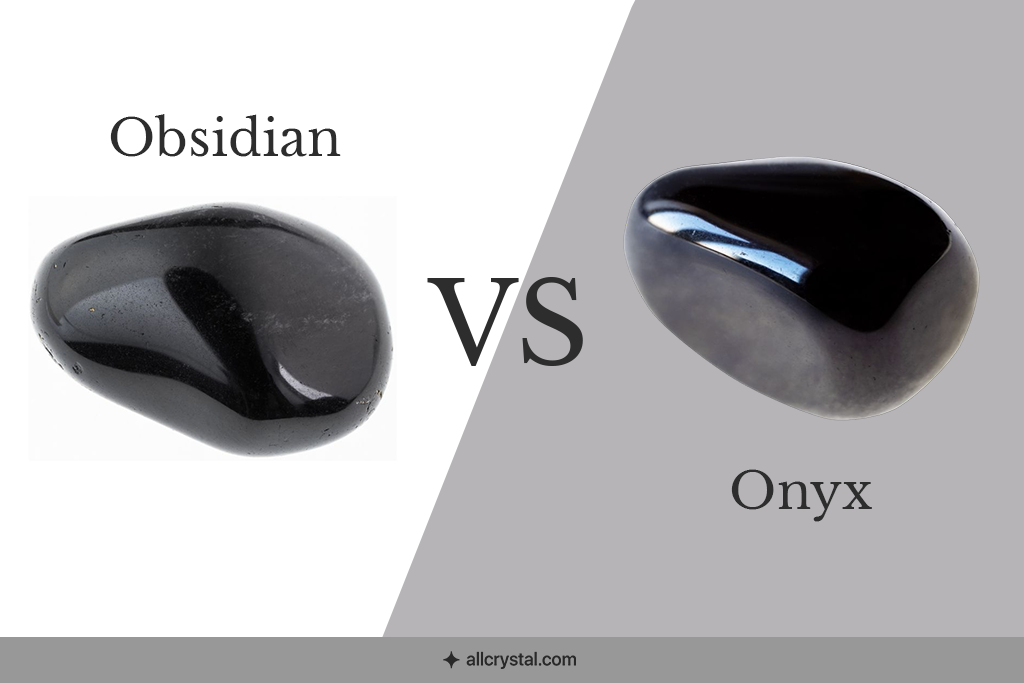
Onyx vs. Obsidian: Decoding the Secrets of Their Black Hues
When you glance at a piece of polished black stone, it’s easy to assume they’re all the same. In truth, the subtle differences between onyx and obsidian tell a story that stretches back millions of years. Understanding these two minerals—both prized for their deep, inky colors—helps collectors, designers, and anyone fascinated by natural beauty make smarter choices.
How Onyx and Obsidian Form: A Geological Overview
Both stones originate deep within the Earth, but the processes that create them diverge sharply. Onyx is a banded form of chalcedony, itself a microcrystalline variety of quartz (SiO2). It forms when silica‑rich fluids seep into cavities of limestone or volcanic rocks, depositing thin layers over time. The characteristic parallel bands—often black with white or brown stripes—are the result of changing mineral concentrations during each deposition cycle.
Obsidian, by contrast, is a volcanic glass. When lava rich in silica cools so rapidly that crystals can’t develop, it solidifies into a smooth, glassy matrix. The lack of crystalline structure gives obsidian its conchoidal fracture and the deep, uniform black that many associate with polished stone. Occasionally, tiny bubbles or mineral inclusions create subtle variations, but the overall appearance remains strikingly homogenous.
Physical Characteristics That Set Them Apart
- Hardness: Onyx scores about 6.5–7 on the Mohs scale, making it relatively resilient to scratches. Obsidian is softer, usually around 5–5.5, so it can chip more easily under impact.
- Texture: The microcrystalline structure of onyx yields a silky, slightly translucent feel under light. Obsidian’s glassy surface is glossy and can appear almost liquid when polished.
- Fracture: Onyx breaks along its banded planes, often revealing a clean, stepped surface. Obsidian shatters with a conchoidal, shell‑like fracture, producing sharp edges that were historically used for cutting tools.
- Color Variations: Pure black onyx is relatively rare; most black onyx features white or gray veining. Obsidian is more consistently jet‑black, though iron oxides can tint it dark green or brown.
Practical Uses: From Jewelry to Tools
Both stones have found a place in human craftsmanship, but their distinct properties steer them toward different applications. Onyx’s durability and attractive banding make it a favorite for cameos, cabochons, and ornamental inlays. Designers often pair black onyx with contrasting metals to highlight its natural sheen, and because it tolerates daily wear, it’s common in rings and bracelets.
Obsidian’s sharp fracture made it indispensable to early cultures for spear points and knives. Even today, artisans carve obsidian into ceremonial blades and decorative knives, valuing the razor‑edge quality. In contemporary design, obsidian is popular for sleek tabletop accessories, such as coasters or vases, where its glass‑like surface adds a modern, minimalist touch.
Cultural Myths and Modern Perceptions
Legends have long surrounded both stones, often attributing mystical powers to their black depths. In ancient Rome, onyx was believed to protect against negativity, while medieval folklore suggested that carrying a piece could ward off evil spirits. Obsidian, on the other hand, earned the nickname “fire stone” among Mesoamerican cultures, who used it for ritual knives and thought it could channel spiritual energy.
Today, the metaphysical community still embraces these ideas. Some practitioners claim black onyx promotes grounding and emotional balance, whereas obsidian is said to facilitate deep self‑reflection. Though scientific evidence for such effects is lacking, the symbolic resonance continues to influence purchasing decisions, especially in the wellness market.
Choosing Between Onyx and Obsidian: Practical Tips
If you’re selecting a stone for everyday jewelry, onyx’s higher hardness and resistance to chipping make it the safer bet. Look for pieces where the banding is visible—those tend to be authentic and not merely dyed quartz. For decorative items where a flawless black surface is paramount, obsidian’s glassy uniformity shines. However, remember that its lower hardness means it should be handled with care to avoid accidental scratches.
Both stones can be treated or dyed, so buying from reputable sources is essential. Ask sellers about origin, any heat‑treatment processes, and whether the piece has been stabilized—especially for larger obsidian slabs that can be prone to internal stress.
FAQ
- Is black onyx natural or dyed? While genuine black onyx does exist, many commercial pieces are actually dyed white or gray onyx. Authentic natural black onyx often shows subtle banding; asking for a certification can help verify its origin.
- Can I use obsidian as a cutting tool at home? Obsidian can produce an extremely sharp edge, sharper than steel, but it’s fragile. For occasional tasks like carving fruit or soft wood, a well‑maintained obsidian blade works, but it’s not ideal for heavy kitchen use.
- Do both stones require special care? Onyx benefits from regular polishing with a soft cloth and mild soap. Obsidian should be cleaned gently and stored away from hard impacts; a padded jewelry box helps prevent chips.
- Which stone holds value better over time? High‑quality, naturally banded black onyx often retains value, especially if sourced from historic mines. Obsidian’s value is more dependent on craftsmanship and size; large, flawless pieces can appreciate, but market demand fluctuates.