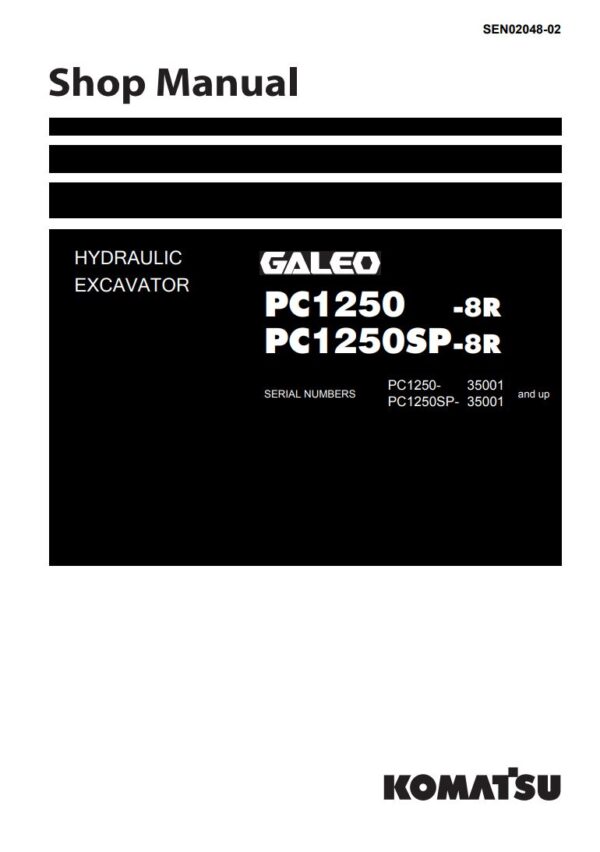
How to Use the Komatsu Excavator Service Manual: Step‑by‑Step Guide
Why the Service Manual Matters
Every Komatsu excavator owner knows that keeping the machine humming is a blend of routine checks and occasional deep dives into its inner workings. The service manual is the map that turns guesswork into confidence, showing where each bolt belongs and which fluid flows where. Without it, even seasoned operators can stumble over minor issues that quickly snowball into costly downtime.
Getting the Right Manual for Your Model
Komatsu offers a family of manuals—operator’s guide, maintenance handbook, and the detailed service manual. The latter is the one that walks you through disassembly, part numbers, torque specifications, and diagnostic procedures. To locate the exact version, note the model series (e.g., PC200‑8), the serial number, and the production year. These identifiers usually appear on the data plate mounted near the cab.
Once you have that information, head to Komatsu’s official parts portal or contact an authorized dealer. Many dealers provide PDF copies for free, while some older models may require a printed set. Beware of third‑party sites that charge extra for documents that are otherwise available directly from the manufacturer.
Structure of the Service Manual
The manual is organized into logical sections that mirror the machine’s subsystems:
- General Information – safety warnings, symbols, and an overview of the excavator’s major components.
- Preventive Maintenance – daily, weekly, and monthly checklists with lubrication points and filter replacement intervals.
- Disassembly and Reassembly – step‑by‑step procedures, torque values, and illustrated diagrams for major assemblies such as the boom, arm, and undercarriage.
- Diagnostics – troubleshooting tables that link symptom codes to probable causes and corrective actions.
- Parts Catalog – exploded views with part numbers, material specifications, and ordering information.
Understanding this layout helps you jump straight to the relevant chapter, whether you’re swapping a hydraulic hose or checking the cooling system.
Reading the Diagrams: Tips for Clarity
Komatsu’s illustrations are dense, especially the exploded views. Here’s how to decode them efficiently:
- Start with the “Exploded View” label; it shows each component separated by thin lines.
- Match the numbers on the diagram to the part list on the opposite page. The list provides the exact part number you’ll need for ordering.
- Look for color‑coded symbols—red usually flags safety‑critical bolts, while blue indicates lubrication points.
- If a diagram includes a “Section View,” rotate the image mentally to see hidden features like internal bearings.
Taking a moment to align the visual cues with the textual instructions saves hours of back‑and‑forth during a repair.
Step‑by‑Step: Replacing a Hydraulic Cylinder Seal
Replacing a seal is a common maintenance task that illustrates how the manual guides you from start to finish.
- Consult the “Hydraulic System” chapter and locate the cylinder diagram. Note the torque specifications for the cylinder head bolts (usually around 45 Nm).
- Follow the safety checklist: depressurize the system, disconnect the power unit, and wear protective gloves.
- Remove the cylinder head bolts in a criss‑cross pattern to avoid warping the flange.
- Extract the old seal using a soft‑edge pick to prevent damaging the groove.
- Clean the seal housing thoroughly, then apply a thin coat of hydraulic oil to the new seal.
- Re‑install the cylinder head, tightening the bolts to the exact torque value using a calibrated torque wrench.
- Re‑pressurize the system and run a leak test as outlined in the “Diagnostics” section.
Each step mirrors a paragraph in the manual, complete with a reference code (e.g., “Section 5‑3‑2”). Keeping that code handy lets you cross‑reference any unexpected issue later.
Common Pitfalls and How to Avoid Them
Even with a solid guide, mistakes happen. Here are the most frequent slip‑ups and quick fixes:
- Skipping Torque Checks – Over‑tightening can strip threads; under‑tightening can cause loosening under load. Always use the specified torque wrench.
- Ignoring Wear Patterns – The manual flags wear limits for pins and bushings. If you notice excessive wear, replace the component even if the service interval hasn’t arrived.
- Using Incorrect Fluid – Komatsu recommends specific hydraulic oil grades. Mixing fluids can degrade performance and void warranties.
- Overlooking Safety Symbols – Red “Danger” tags indicate high‑pressure or high‑temperature areas. Treat them as non‑negotiable warnings.
When you encounter a symbol or note you don’t understand, pause and look it up in the “General Information” chapter. It’s better to spend a minute reading than to risk a repair error.
Keeping the Manual Up to Date
Komatsu periodically releases service bulletins that amend the original manual—often to address design tweaks or new part numbers. Subscribe to the dealer’s newsletter or register on Komatsu’s website to receive these updates automatically. When a bulletin arrives, insert it at the back of your printed manual or merge it into your digital PDF for easy reference.
FAQ
What information is included in a Komatsu excavator service manual?
The manual covers safety guidelines, preventive maintenance schedules, detailed disassembly/reassembly procedures, torque specifications, diagnostic flowcharts, and a comprehensive parts catalog with numbers and ordering details.
Can I use a service manual from a different Komatsu model?
While many components are shared across models, torque values, part numbers, and hydraulic capacities can differ. It’s safest to use the manual that matches your exact model series and serial number.
How often should I refer to the service manual?
Besides major repairs, consult the manual during routine checks—daily inspections, weekly fluid checks, and monthly filter changes. It also serves as a reference whenever a fault code appears on the control panel.
Is a digital PDF as reliable as a printed manual?
Yes, provided the PDF is the official version from Komatsu. Digital copies offer searchable text and quick navigation, which can speed up troubleshooting on the shop floor.