How to Analyze Irrational Functions: A Complete Guide
Irrational functions—expressions that involve roots of polynomials—show up in everything from physics equations to economics models. Because the variable lives under a radical sign, the usual tricks for linear or rational functions often need a tweak. This guide walks you through the steps that matter: finding domains, sketching accurate graphs, handling transformations, solving equations, and even touching on calculus. By the end, you’ll feel comfortable tackling most problems that feature an irrational function.
Understanding the Basics of Irrational Functions
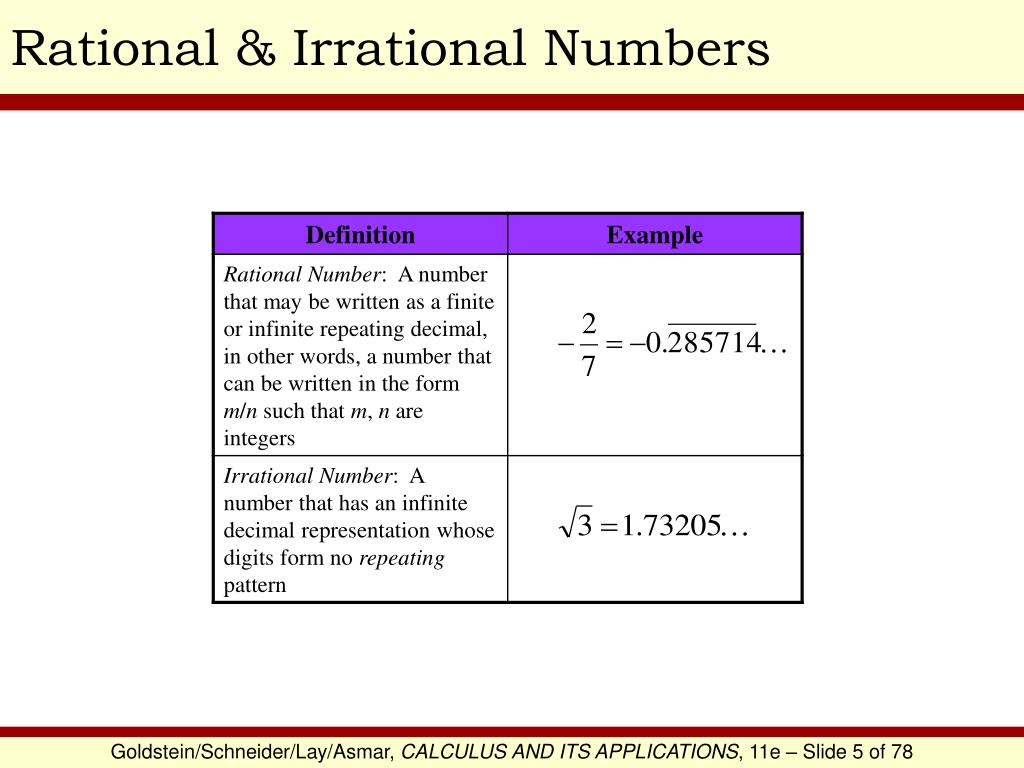
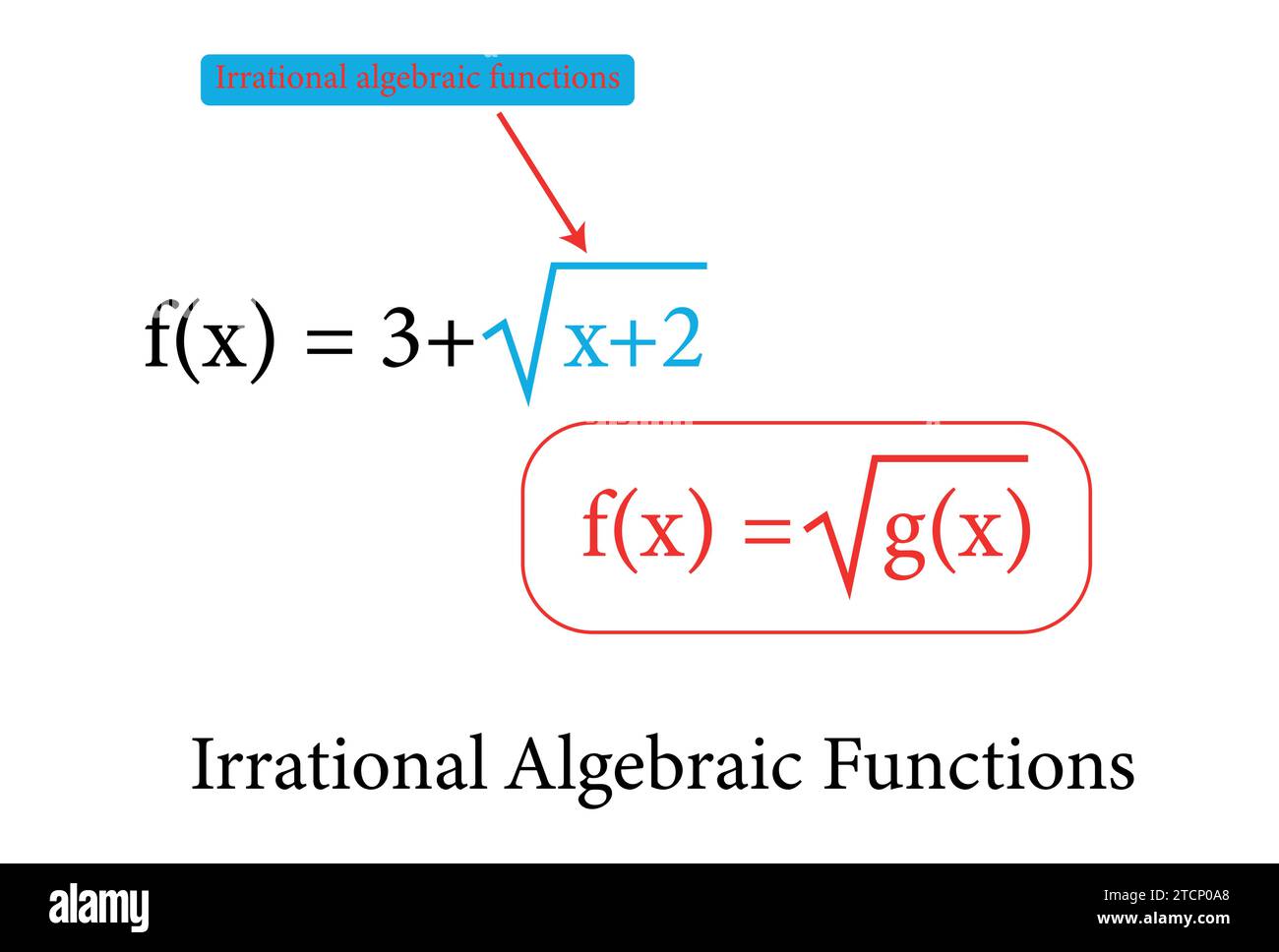
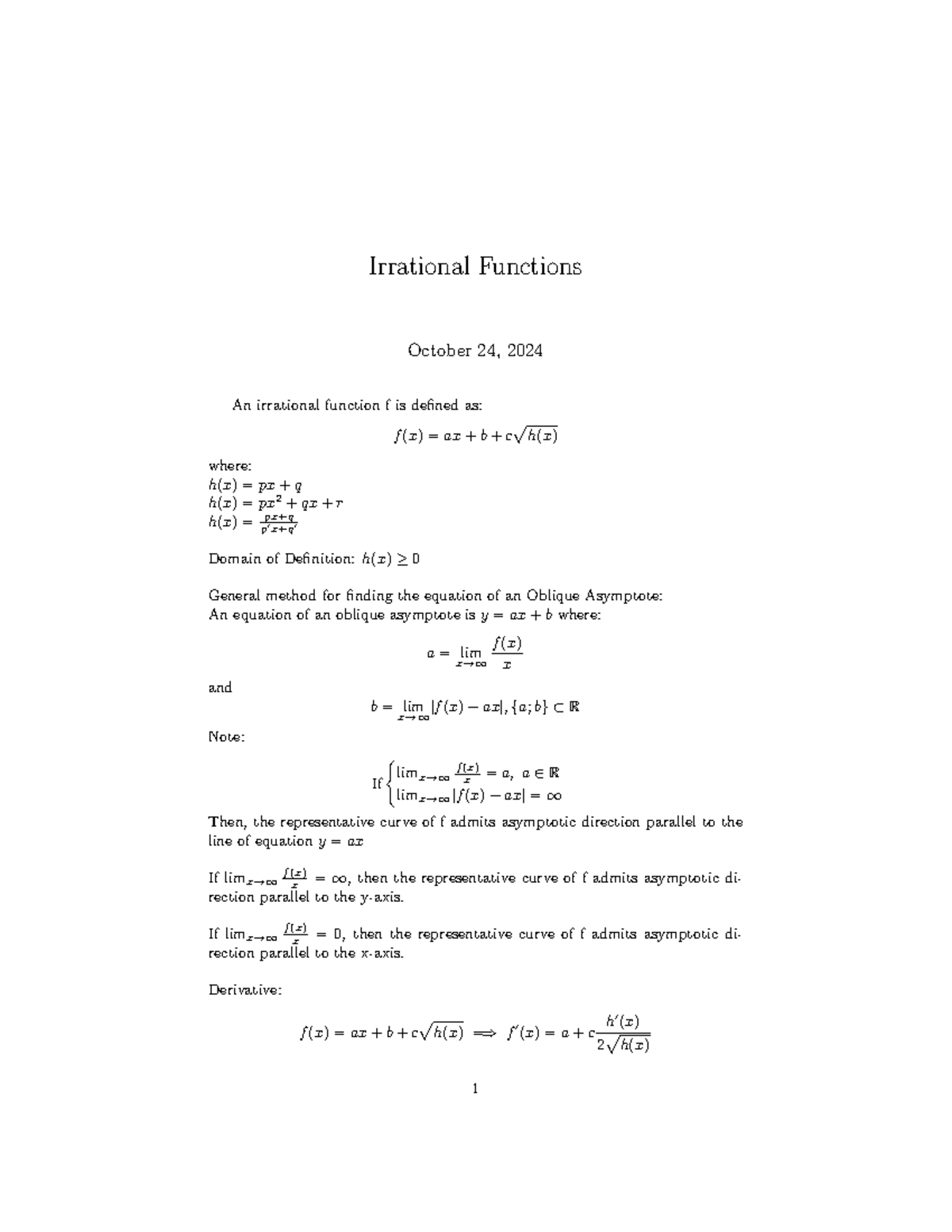
At its core, an irrational function has the form f(x)=√(g(x)) or f(x)=∛(g(x)), where g(x) is a polynomial or another algebraic expression. The word “irrational” refers not to the number’s rationality but to the presence of a radical that can’t be simplified to a rational expression. The most common example is f(x)=√(x‑4), which only makes sense for x≥4 because the square root of a negative real number is undefined in the real number system.
Key properties to remember:
- The radicand (the expression under the root) must be non‑negative for even‑order roots.
- Odd‑order roots (cube, fifth, etc.) accept any real radicand.
- The overall shape of the graph is heavily dictated by the behavior of the radicand.
Determining Domain and Range
The domain is the set of all x values that keep the radicand in an allowable range. For an even root, solve g(x)≥0. For an odd root, the domain is typically all real numbers unless other restrictions (like denominators) appear.
Example: f(x)=√(2x‑6). Setting 2x‑6≥0 gives x≥3. So the domain is [3,∞). The range starts at 0 (the smallest value the square root can take) and climbs without bound, so it’s [0,∞).
When a rational expression appears inside the root—say f(x)=√((x+1)/(x‑2))—you need to consider both the numerator and denominator. The radicand must be ≥0, and the denominator cannot be zero. Solving the resulting inequality yields the precise domain.
Sketching the Graph – Key Features
Once the domain is set, you can outline the graph using a handful of strategic points and symmetry observations.
- Intercepts: Plug in x=0 for the y‑intercept (if 0 lies in the domain). Solve f(x)=0 for x‑intercepts.
- End behavior: Look at the leading term of the radicand. If g(x)≈ax^n for large |x|, then f(x)≈|a|^{1/k}·|x|^{n/k} where k is the root order.
- Monotonicity: Take the derivative (if you’re comfortable) or test a few points to see whether the function is increasing or decreasing on each interval of the domain.
Putting these pieces together, draw a smooth curve that respects the intercepts, stays within the domain, and follows the identified increasing/decreasing trends.
Transformations and Their Effects
Just like with any other function, you can shift, stretch, or reflect an irrational function. The standard transformation formula is
F(x)=a·√(b·(x‑h)) + k, where:
- a vertically stretches (|a|>1) or compresses (0<|a|<1) the graph; a negative a flips it over the x‑axis.
- b inside the root scales the radicand horizontally; b>1 squeezes the graph toward the y‑axis.
- h shifts the graph right (positive) or left (negative).
- k moves the whole curve up or down.
Example: f(x)=2√(x‑3)‑1 starts at the point (3,‑1) and grows twice as fast as the base function √x. Recognizing these patterns saves a lot of time when sketching or solving applied problems.
Solving Equations Involving Irrational Functions
When an equation contains a root, isolate the radical first, then square (or raise to the appropriate power) both sides. Always check extraneous solutions, because the squaring step can introduce values that violate the original domain.
Consider √(x+2)=x‑4. Isolate: already isolated. Square: x+2=(x‑4)^2 → x+2=x^2‑8x+16 → 0=x^2‑9x+14 → (x‑7)(x‑2)=0. Potential solutions are x=7 and x=2. Plug back: √(9)=3 (works for x=7); √(4)=‑2 (fails for x=2 because the right side is negative). So the only valid solution is x=7.
For higher‑order roots, raise both sides to the corresponding power, but the same vigilance about extraneous roots applies.
Calculus with Irrational Functions
Derivatives are straightforward once you rewrite the root as an exponent. For f(x)=√(g(x)), think of it as (g(x))^{1/2}. Using the chain rule:
f'(x)=½·(g(x))^{‑½}·g'(x). This tells you that the slope is inversely proportional to the square root of the radicand, multiplied by the derivative of the inside function.
Integrals can be trickier. A common technique is substitution: let u=g(x), then du=g'(x)dx. The integral of √(u) becomes ∫u^{1/2}du = (2/3)u^{3/2}+C, which you translate back to x.
Example: ∫√(4x+1)dx. Set u=4x+1, du=4dx → dx=du/4. The integral becomes (1/4)∫u^{1/2}du = (1/4)·(2/3)u^{3/2}+C = (1/6)(4x+1)^{3/2}+C.
Real‑World Applications
Irrational functions pop up whenever a quantity depends on the square root of another measurement. In physics, the period of a simple pendulum (for small angles) is T=2π√(L/g), a direct irrational relationship between length L and gravitational acceleration g. In finance, the Black‑Scholes formula for option pricing involves a square root of time, reflecting how volatility accumulates.
Engineering also relies on these functions. The stress in a beam under a uniformly distributed load varies with the square root of the distance from the support, and designers use that relationship to determine safe dimensions.
Frequently Asked Questions
What makes a function “irrational”?
An irrational function contains a root (square, cube, etc.) of a variable expression. The term refers to the radical, not to the rationality of its values.
Can an irrational function have a vertical asymptote?
Yes, if the radicand includes a denominator that approaches zero within the domain. For example, f(x)=√(1/(x‑2)) shoots toward infinity as x→2⁺, creating a vertical asymptote at x=2.
How do I determine if a solution is extraneous?
After solving the squared (or higher‑power) equation, substitute each candidate back into the original equation. If it violates the domain or fails to satisfy the initial equality, discard it as extraneous.
Do odd‑order roots behave differently from even‑order roots?
Odd‑order roots accept negative radicands, so their domain is often all real numbers unless other restrictions exist. Even‑order roots require the radicand to be non‑negative, which usually limits the domain.