How the New Order Took Hold: Indonesia’s Historical Roots
When you hear “New Order,” the name immediately conjures Soeharto’s three‑decade rule, but the story begins long before 1966. To grasp why the regime could reshape a nation so dramatically, we have to trace the colonial imprint, the chaotic early years of independence, and the pivotal 1965 crisis that opened the door for a military‑backed government. This article untangles those threads, showing how politics, economics, and foreign influences intertwined to create the New Order’s foundation.
Colonial Legacy and Early Post‑Independence Turbulence
Indonesia emerged from Dutch colonial rule in 1945, but the structures left behind—centralized bureaucracy, a plantation economy, and a fragmented elite—didn’t disappear overnight. The newly proclaimed Republic inherited a thin administrative network, and the Japanese occupation (1942‑45) had further destabilized the country, leaving a power vacuum that various regional militias and political parties rushed to fill.
In the immediate post‑war years, the nation grappled with competing visions: Sukarno’s “guided democracy” leaned toward nationalist populism, while left‑leaning groups, especially the Indonesian Communist Party (PKI), gained momentum among peasants and urban workers. Meanwhile, the military, still organized along the Dutch colonial model, remained a relatively weak but increasingly politicized institution.
These contradictions set the stage for conflict. By the late 1950s, regional rebellions in Sumatra and the outer islands exposed the central government’s limited reach, while economic mismanagement spurred inflation and food shortages. The stage was ready for a decisive, albeit violent, turning point.
The 1965 Coup and the Rise of Soeharto
The turning point arrived on the night of September 30, 1965, when a group of army officers kidnapped and killed several top generals. The incident—later branded the “30 September Movement”—provided the pretext for a nationwide anti‑communist purge. Soeharto, then a senior commander of the Army Strategic Reserve (KOSTRAD), seized the moment, framing the PKI as the mastermind behind the coup attempt.
What followed was a brutal campaign: estimates suggest that anywhere from 500,000 to over a million alleged communists were killed, often by militia groups and army units acting with tacit approval. The violence not only eliminated the PKI as a political force but also cemented the army’s reputation as the nation’s guardian against subversion.
In March 1966, Soeharto obtained a presidential decree—Supersemar—granting him authority to issue government orders. Within months, Sukarno’s influence waned, and Soeharto formally assumed the presidency in 1968, ushering in what historians now call the “New Order.”
Economic and Political Strategies that Cemented Power
Unlike the ideological fervor of the early Republic, the New Order pursued pragmatic development. Soeharto’s regime invited foreign investment, especially from the United States, Japan, and Western Europe, to revitalize the export‑oriented economy. The “Berliner” (Berita Ekonomi Lanjutan) policy emphasized oil, natural gas, and timber—sectors where Indonesia held comparative advantage.
- Stabilizing the currency: The government introduced a new rupiah in 1965, curbing hyperinflation and restoring confidence among traders.
- Infrastructure push: Massive road, port, and dam projects linked remote regions to the central market, creating a physical network that reinforced political control.
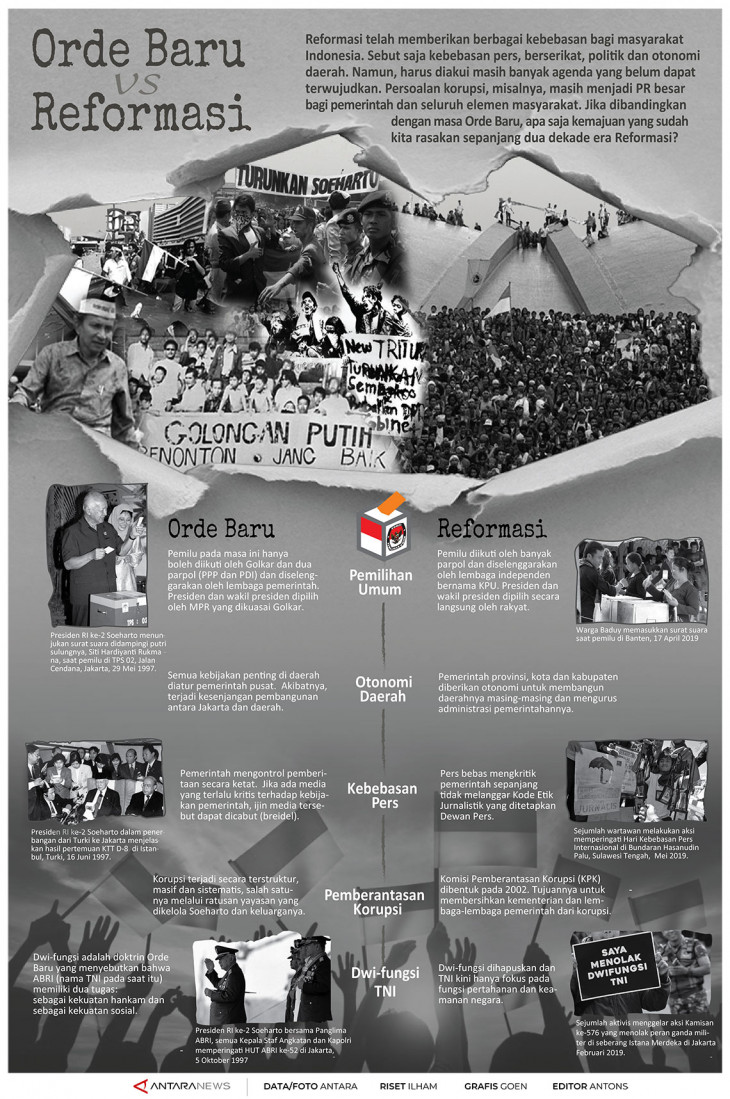
- Controlled political space: Parties were limited to a “government‑approved” set, and the Golkar organization—originally a coalition of functional groups—became the primary vehicle for elections, ensuring predictable outcomes.
- Security apparatus: The army’s dual function (dwifungsi) doctrine allowed it to intervene in civilian affairs, while intelligence agencies monitored dissent, keeping potential opposition in check.
These policies produced impressive growth figures—annual GDP often surpassed 7 % in the 1970s—yet they also entrenched patronage networks. Business elites, regional elites, and military officers exchanged favors, creating a resilient but opaque power structure.
Why the New Order Ended and Its Lasting Impact
By the late 1990s, the system that once seemed unassailable began to crumble. The Asian financial crisis of 1997 exposed Indonesia’s overreliance on short‑term capital flows and weak regulatory oversight. The rupiah plummeted, unemployment surged, and public anger turned toward corruption and cronyism that had flourished under the New Order.
Mass protests, most famously the “Reformasi” movement, forced Soeharto to resign in May 1998 after more than three decades in power. The subsequent era introduced democratic reforms, decentralization, and a more vibrant civil society, but the shadows of the New Order linger: the military still wields considerable influence, and many economic conglomerates trace their origins to the patronage system of the 1970s.
Understanding those historical roots helps explain why Indonesia’s democracy, while robust, continues to wrestle with legacy issues—especially balancing regional autonomy with national cohesion and navigating the delicate relationship between the armed forces and civilian government.
FAQ
What triggered the 1965 anti‑communist purge? The assassination of several army generals, blamed on the PKI, gave Soeharto a pretext to launch a nationwide crackdown that eliminated communist influence and bolstered the military’s political role.
How did the New Order differ economically from Sukarno’s era? Sukarno emphasized nationalist, self‑sufficient policies, while the New Order opened the economy to foreign investment, focused on export commodities, and pursued rapid industrialization through infrastructure projects.
Did the New Order completely suppress political opposition? Formal opposition parties were limited, but dissent persisted in underground movements, student groups, and later, the Reformasi protests that ultimately toppled the regime.
Is the Indonesian military still involved in politics today? The military’s “dual function” doctrine was officially ended in the early 2000s, yet the armed forces retain significant influence, particularly in regional security and certain economic sectors.