How Scientists Explore Superclusters, the Universe’s Giant Web
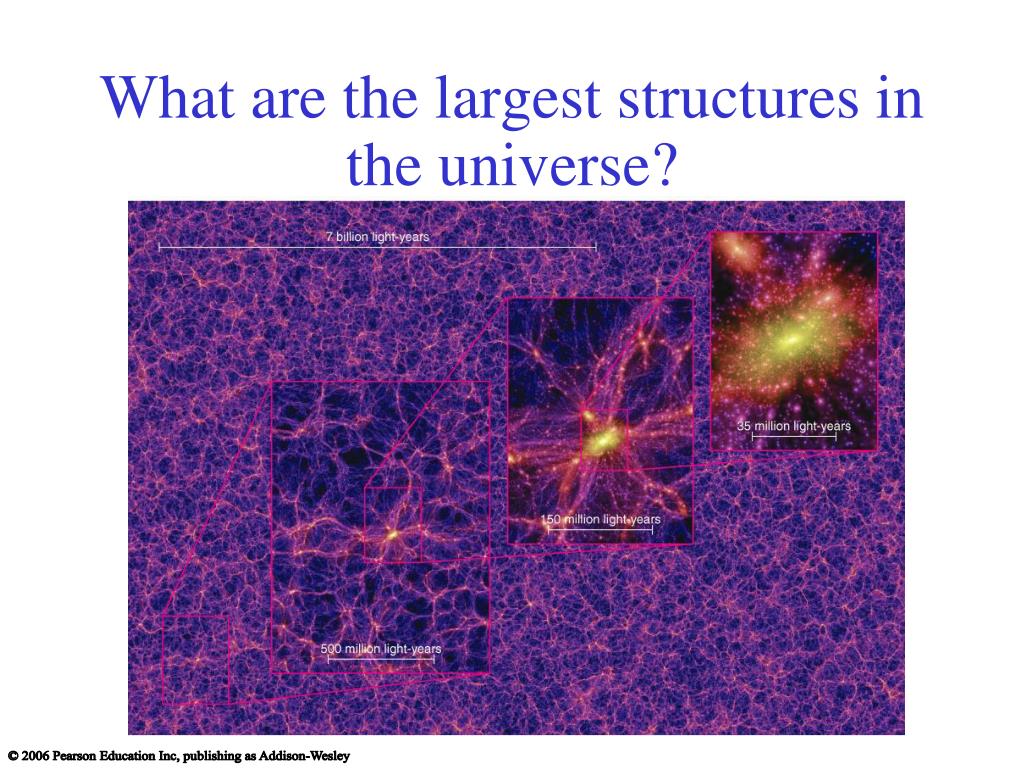
Supercluster research is exploring the universe's largest structures, and the effort feels a bit like trying to map a city from a single rooftop. These colossal assemblies of galaxy clusters stretch across hundreds of millions of light‑years, weaving a cosmic web that defines the large‑scale geometry of everything we see. Yet, despite their size, we only began to recognize them in the late 20th century, and each new survey peels back another layer of mystery.
What Exactly Is a Supercluster?
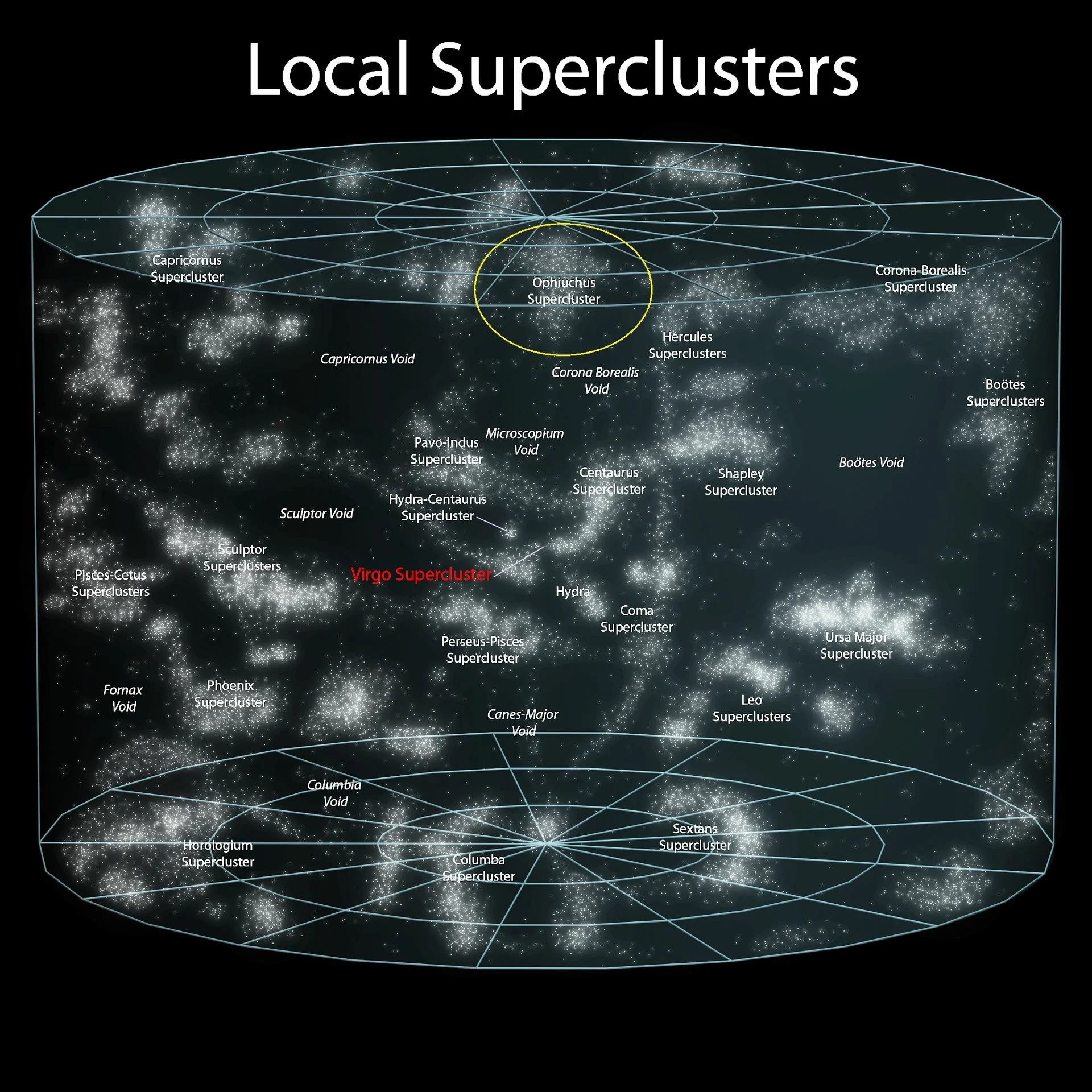
In simple terms, a supercluster is a gravitationally linked collection of galaxy clusters and groups. While a single galaxy cluster might contain a few thousand galaxies, a supercluster bundles dozens of such clusters together, forming a filament‑like structure that can span up to 300 million light‑years. The most famous example is the Laniakea Supercluster, which houses the Milky Way and roughly 100,000 other galaxies.
These structures aren't solid objects; instead, they are regions where dark matter, gas, and galaxies are more densely packed than the surrounding voids. The contrast between dense filaments and empty spaces gives the universe its characteristic “cosmic web” appearance when visualized in three dimensions.
Why Do Astronomers Care About Superclusters?
Understanding superclusters helps answer several big‑picture questions:
- Cosmic Evolution: Their distribution records the history of matter clumping since the Big Bang.
- Dark Energy Insights: The rate at which superclusters expand versus contract offers clues about the mysterious force accelerating the universe.
- Testing Physics: Comparing observed supercluster shapes with predictions from simulations tests the validity of our cosmological models.
In other words, superclusters are like the skeleton of the cosmos—study them, and you get a glimpse of how the whole body is put together.
Tools of the Trade: Mapping the Cosmic Giants
Mapping something that stretches across billions of light‑years requires a toolbox that mixes traditional astronomy with cutting‑edge data science.
Redshift Surveys
Redshift tells us how fast a galaxy is moving away from us, which translates into distance thanks to Hubble’s law. Large redshift surveys—such as the Sloan Digital Sky Survey (SDSS) and the 2dF Galaxy Redshift Survey—have cataloged millions of galaxies, providing the raw coordinates needed to identify supercluster boundaries.
Infrared and X‑ray Observations
While visible light can be obscured by dust, infrared telescopes (like NASA’s WISE) see through it, revealing hidden galaxy clusters. Meanwhile, X‑ray observatories detect the hot gas that permeates clusters, a reliable signpost of massive structures.
Computational Reconstruction
Once the data are in hand, researchers use algorithms such as the “friends‑of‑friends” method to link nearby galaxies into groups, then stitch those groups into larger assemblies. More sophisticated approaches employ Bayesian inference or machine‑learning clustering to account for observational uncertainties.
Recent Discoveries That Shifted the Landscape
Every few years a new supercluster or a surprising feature of an existing one forces a rethink.
One notable finding came from the Dark Energy Survey, which highlighted a massive filament—sometimes called the “Great Wall”—stretching across a region previously thought to be a relatively empty void. This challenged earlier notions that voids are completely empty, suggesting instead that low‑density bridges of dark matter may thread through them.
Another breakthrough involved the identification of “hyper‑superclusters,” structures that appear to be aggregations of several superclusters bound together. While still a subject of debate, early simulations indicate such mega‑assemblies could form in regions where dark energy’s influence is locally weaker.
Open Questions and the Road Ahead
Even with powerful telescopes and sophisticated models, many puzzles linger:
- How precisely does dark energy affect the growth of superclusters over cosmic time?
- Are the observed hyper‑superclusters temporary alignments, or are they stable, long‑lived features?
- What role does baryonic (normal) matter play in shaping the fine structure of the cosmic web?
Future missions like the ESA’s Euclid telescope and NASA’s Nancy Grace Roman Space Telescope promise deeper, wider surveys that will tighten the error bars on these questions. Coupled with advances in high‑performance computing, researchers anticipate a new era where the three‑dimensional map of the universe will be as detailed as today’s street‑level navigation apps.
Frequently Asked Questions
What distinguishes a supercluster from a galaxy filament?
A filament is a thinner, thread‑like bridge of galaxies and dark matter connecting clusters, whereas a supercluster is a more massive, roughly spherical or elongated region that contains multiple clusters and filaments within it.
Can superclusters be used to measure the amount of dark matter?
Yes, because the gravitational pull of a supercluster depends heavily on its dark‑matter content. By studying galaxy motions and the temperature of intracluster gas, astronomers can estimate the dark‑matter fraction within these vast structures.
Do superclusters evolve over time?
They do, but on timescales far beyond human history. As the universe expands, the overall density of matter drops, and some superclusters may eventually disperse, while others could become more tightly bound if dark matter concentrations are high enough.
Is the Milky Way part of a supercluster?
Indeed, our galaxy resides in the Laniakea Supercluster, a sprawling network of clusters that also includes the Virgo Cluster, which is the nearest major galaxy cluster to us.