How PLC Counters Supercharge Modern Plant Automation
When you hear the term “PLC counters,” the first image that often comes to mind is a simple tally of events. In reality, these tiny workhorses are the backbone of countless automated processes, turning raw sensor data into actionable control decisions. From counting parts on a conveyor to tracking motor rotations, PLC counters translate repetitive actions into the precise timing and sequencing that modern factories depend on.
Understanding PLC Counters: Core Functions
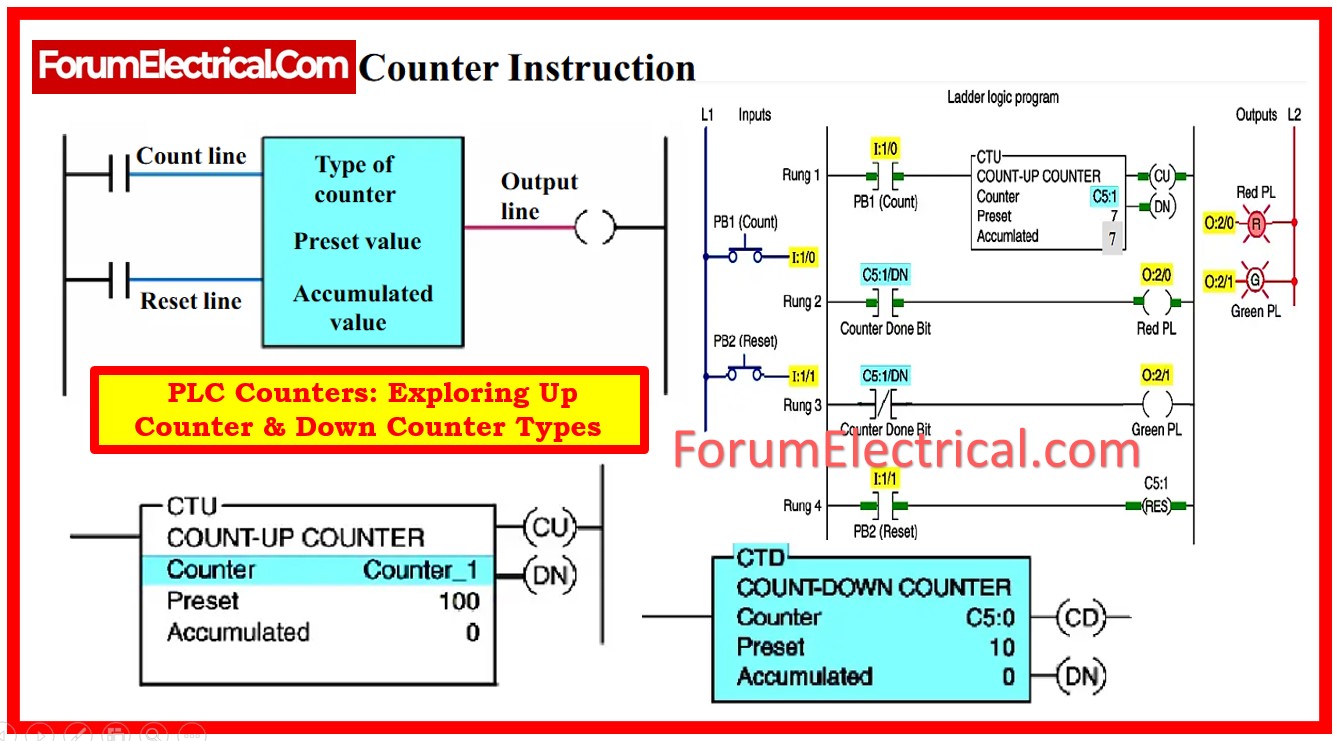
A PLC (Programmable Logic Controller) counter is essentially a memory register that increments or decrements in response to digital input pulses. Unlike a regular variable that stores a static value, a counter continuously updates its count as long as the configured conditions are met. This real‑time tracking enables the controller to trigger events—like starting a motor after a set number of items have passed a sensor—without the need for external hardware.
Most counters can operate in several modes: up, down, up/down, and even preset mode, where the counter resets automatically once it reaches a predefined value. These modes give engineers the flexibility to handle everything from simple batch counts to more complex cyclic processes.
Basic Types of Counters in PLCs
While the concept is straightforward, PLC manufacturers usually provide a few distinct counter types:
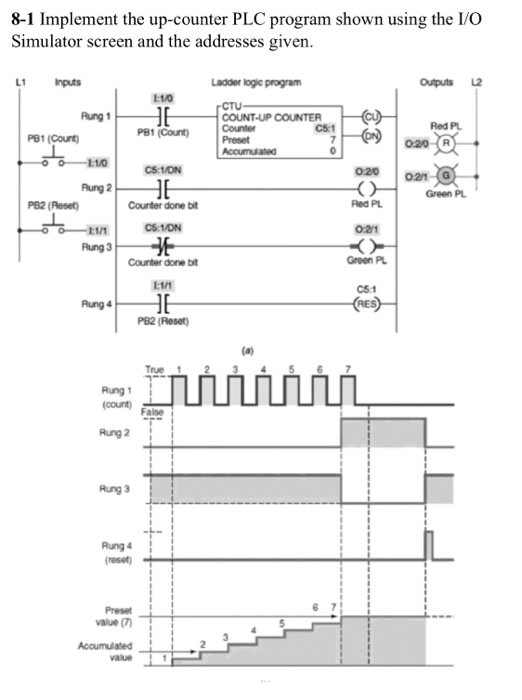
- Up Counter (CTU): Increments on each pulse, ideal for counting items moving forward.
- Down Counter (CTD): Decrements with each pulse, often used when you need to track remaining inventory or time.
- Up/Down Counter (CTUD): Can increase or decrease based on two separate inputs, perfect for bidirectional conveyors.
Some advanced PLCs also feature preset counters that automatically reset after hitting a set value, allowing seamless batch processing without additional rung logic.
Practical Applications Across Industries
PLC counters are everywhere, but a few standout uses illustrate why they’re so valuable.
Manufacturing Assembly Lines
Imagine a bottling plant where each bottle must receive a cap, a label, and a fill. A counter can keep track of how many bottles have passed each station, ensuring the next step only begins when the previous one is complete. If the count doesn’t match the expected number, the system can raise an alarm before a costly bottleneck forms.
Packaging and Palletizing
In packaging, a down counter often monitors how many cartons remain to be sealed. Once the counter hits zero, the PLC can automatically switch to a new pallet, reducing downtime and the chance of human error.
Motor and Conveyor Control
For rotating equipment, a pulse generator attached to the motor shaft feeds pulses to a PLC counter. By setting a preset value, the controller can stop the motor after a specific number of revolutions, a technique frequently used in winding or cutting operations.
Process Industries
In water treatment or chemical processing, timers are sometimes implemented with counters that count seconds or minutes based on a 1 Hz pulse. This approach offers higher reliability than dedicated timer modules, especially when precise interval control is crucial.
Programming Tips to Get the Most Out of Counters
Effective use of PLC counters isn’t just about dragging a rung onto the ladder diagram; a few best practices can make a big difference.
- Debounce Input Signals: Mechanical sensors can bounce, creating multiple pulses for a single event. Adding a small software filter or using hardware debouncing helps keep the count accurate.
- Use Reset Logic Wisely: Resetting a counter too early can cause missed counts. Typically, you’ll want the reset to occur only after the preset value has been reached and the subsequent process step has confirmed completion.
- Monitor Counter Overflows: Some PLCs have limited word sizes (e.g., 16‑bit). If you anticipate very high counts, consider using double‑word counters or resetting at a known high point.
- Document Rung Purpose: Because counters can be subtle, clear comments or descriptive rung labels help future engineers understand why a particular count matters.
When you combine these tactics with the right hardware—such as high‑resolution encoders for precise speed control—you’ll find that PLC counters can replace a whole suite of external counting devices, simplifying both wiring and maintenance.
Future Trends: Smart Counters and IoT Integration
As Industry 4.0 gains momentum, counters are evolving beyond simple tallying. Modern PLCs can now push count data directly to cloud platforms, enabling real‑time analytics on production rates. Predictive maintenance algorithms, for instance, may flag a motor that’s slowing down because its rotation count per minute is dropping below a set threshold.
Another emerging feature is the ability to link counters with vision systems. A camera can verify that an item has been correctly placed, then send a pulse to the PLC counter only when the visual inspection passes. This synergy reduces waste and boosts overall quality without adding extra mechanical sensors.
FAQ
What’s the difference between a CTU and a CTD?
A CTU (Count Up) increments its value with each input pulse, while a CTD (Count Down) decrements. Use CTU when you’re tracking accumulation (e.g., items produced) and CTD when you need to monitor depletion (e.g., remaining inventory).
Can a PLC counter replace a physical timer?
Yes, if you feed a 1 Hz pulse into the counter, each count represents one second. By setting a preset value, the PLC can act as a timer, offering the same functionality with the added benefit of easy integration into existing logic.
How do I prevent missed counts from noisy signals?
Implement signal debouncing either in hardware (RC filters) or software (requiring the input to stay high for a minimum duration). This smooths out spurious transitions that could otherwise cause false increments.
Is there a limit to how high a counter can count?
The limit depends on the PLC’s data type. A standard 16‑bit counter tops out at 65,535, whereas a double‑word counter can reach over 4 billion. Choose the appropriate size based on expected maximum counts.