How a Letter of Credit Secures International Payments
When buying or selling across borders, trust can be hard to come by. A Letter of Credit (LC) offers a middle ground that protects both buyer and seller without demanding full pre‑payment. In this guide we’ll unpack how the instrument works, why banks get involved, and what practical steps you can take to make the most of it.
What Exactly Is a Letter of Credit?
An LC is a written commitment from a bank—often the buyer’s bank—to pay a specified amount to the seller, provided the seller meets the documentary conditions outlined in the credit. Think of it as a conditional guarantee: the bank steps in only if the seller can prove, through paperwork, that they have fulfilled their part of the deal.
The key point is that the bank, not the buyer, is the source of payment. This shift reduces the seller’s exposure to the buyer’s credit risk, while the buyer still retains control over the timing and quality of the shipment.
Common Types of Letters of Credit
- Irrevocable LC – Once issued, it cannot be altered or canceled without the agreement of all parties. This is the default type for most international trade.
- Revocable LC – Can be changed or withdrawn by the buyer without consent from the seller. Rarely used because it offers little protection.
- Confirmed LC – A second bank, usually in the seller’s country, adds its own guarantee to pay, enhancing security if the issuing bank’s stability is in doubt.
- Revolving LC – Allows multiple draws over a set period, ideal for ongoing shipments between the same parties.
- Standby LC – Functions more like a performance bond; the bank pays only if the buyer defaults on contractual obligations.
Step‑by‑Step: How a Letter of Credit Moves Money
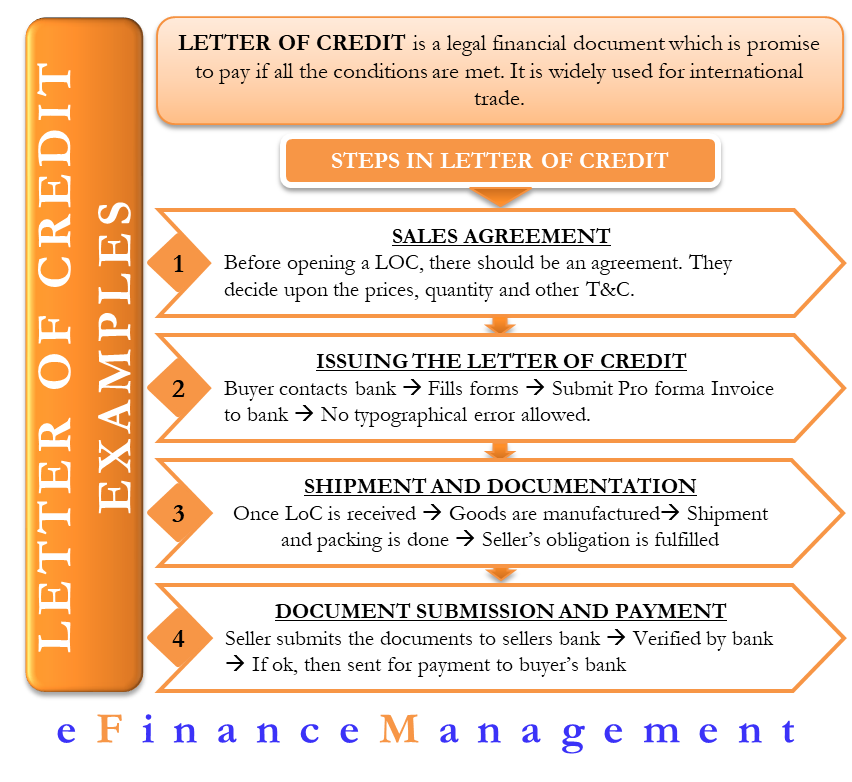
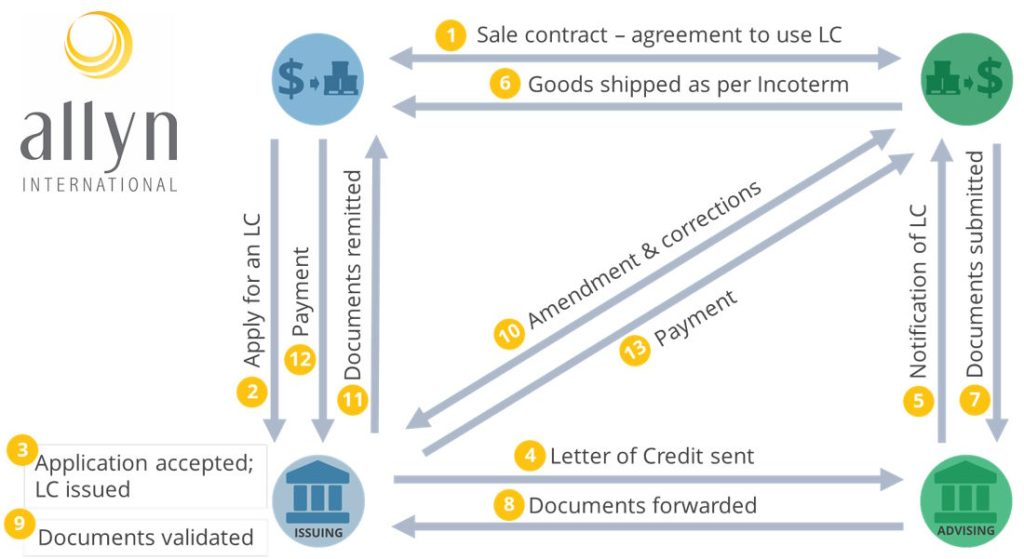
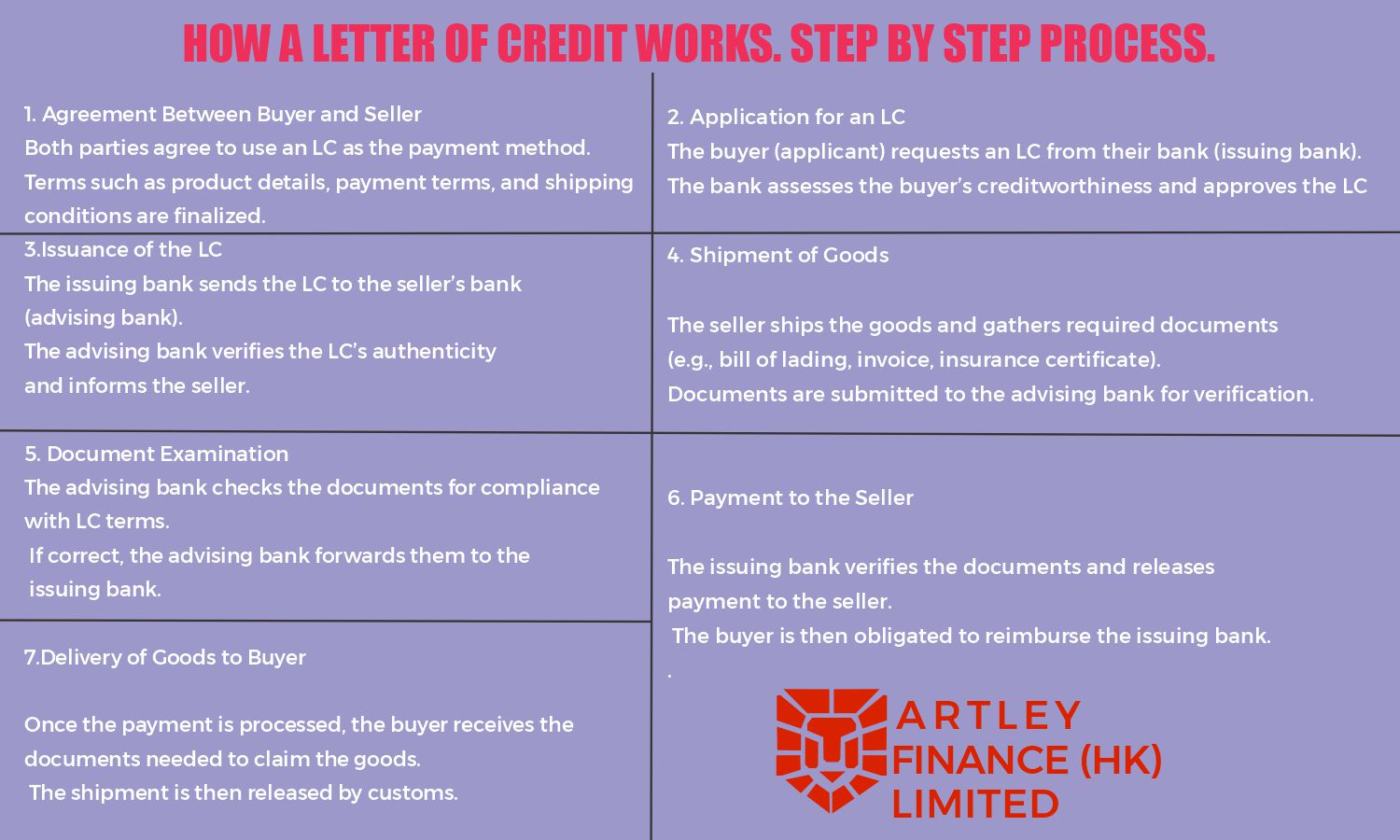
1. Contract Negotiation: Buyer and seller agree on price, shipment terms, and the requirement for an LC.
2. Application: Buyer approaches their bank, providing the sales contract and details of the desired LC. The bank assesses the buyer’s creditworthiness and may require collateral.
3. Issuance: The bank drafts the LC, spelling out exact documents—commercial invoice, bill of lading, insurance certificate, etc.—that the seller must present.
4. Advising: A correspondent or advising bank in the seller’s country forwards the LC, confirming its authenticity.
5. Shipment & Documentation: The seller ships the goods and gathers the required documents, then submits them to their bank.
6. Document Review: The seller’s bank checks compliance, forwards the paperwork to the issuing bank, which performs a second review.
7. Payment: If everything matches the LC terms, the issuing bank releases funds to the seller—either immediately or after a stipulated period.
8. Delivery of Documents: The buyer receives the documents, enabling them to claim the goods from the carrier.
Why Traders Favor Letters of Credit
Security is the headline benefit. By shifting payment risk to a reputable bank, sellers can ship without fearing non‑payment, and buyers can ensure that payment only occurs after the seller fulfills the agreed conditions.
Additionally, LCs can open doors to financing. Sellers often use the credit as collateral for short‑term loans, while buyers may negotiate longer payment terms because the bank guarantees the seller’s receipt of funds.
However, the system isn’t free. Banks charge issuance, amendment, and negotiation fees—typically a small percentage of the transaction value. Also, the paperwork can be meticulous; even a minor discrepancy (like a typo in the shipping date) may cause a delay or rejection.
Practical Tips for Using an LC Effectively
- Clarify Documentary Requirements early in the contract. The fewer the conditions, the smoother the process.
- Work With Experienced Banks that have a solid network in the seller’s country. Their familiarity can speed up document verification.
- Plan for Timing—LCs usually have a validity period. Align shipment dates to avoid the credit expiring before documents are ready.
- Consider Confirmation if the issuing bank’s credit rating is questionable or if political risk is high in the buyer’s jurisdiction.
- Stay Organized by using a checklist for each document. Missing a single certificate can stall payment for days.
Potential Drawbacks and How to Mitigate Them
The most common complaint is the administrative burden. To keep it manageable, many companies appoint a trade finance officer or outsource the paperwork to a specialist service.
Another concern is cost. While fees are unavoidable, you can negotiate lower rates if you have a longstanding relationship with the bank or if the transaction volume justifies a bulk discount.
Finally, an LC does not eliminate all risk. If the seller ships defective goods that still meet the documentary criteria, the buyer may still be on the hook for payment. Incorporating inspection clauses or using a standby LC for performance guarantees can add an extra safety net.
Frequently Asked Questions
Can a Letter of Credit be used for domestic transactions?
Yes, though it’s less common. Domestic LCs can still provide a neutral guarantee when the buyer and seller lack a trusted relationship, but many businesses opt for simpler payment terms like escrow or direct bank transfers.
What happens if the documents don’t match the LC terms?
The bank will typically refuse payment and notify both parties. The seller can then amend the documents, request an amendment to the LC (which may involve additional fees), or negotiate a settlement directly with the buyer.
Is a confirmed LC the same as a standard LC?
No. A confirmed LC includes an extra guarantee from a second bank—usually in the seller’s country—making the payment obligation stronger, especially when the issuing bank’s creditworthiness is uncertain.
How long does the whole LC process usually take?
From application to issuance, expect a few days to a week, depending on the banks involved. Adding shipment and document verification can extend the timeline by another one to two weeks.