From Filo to Fantastic: Mastering Baklava Bliss
Why Baklava Bliss Captivates Every Sweet Tooth
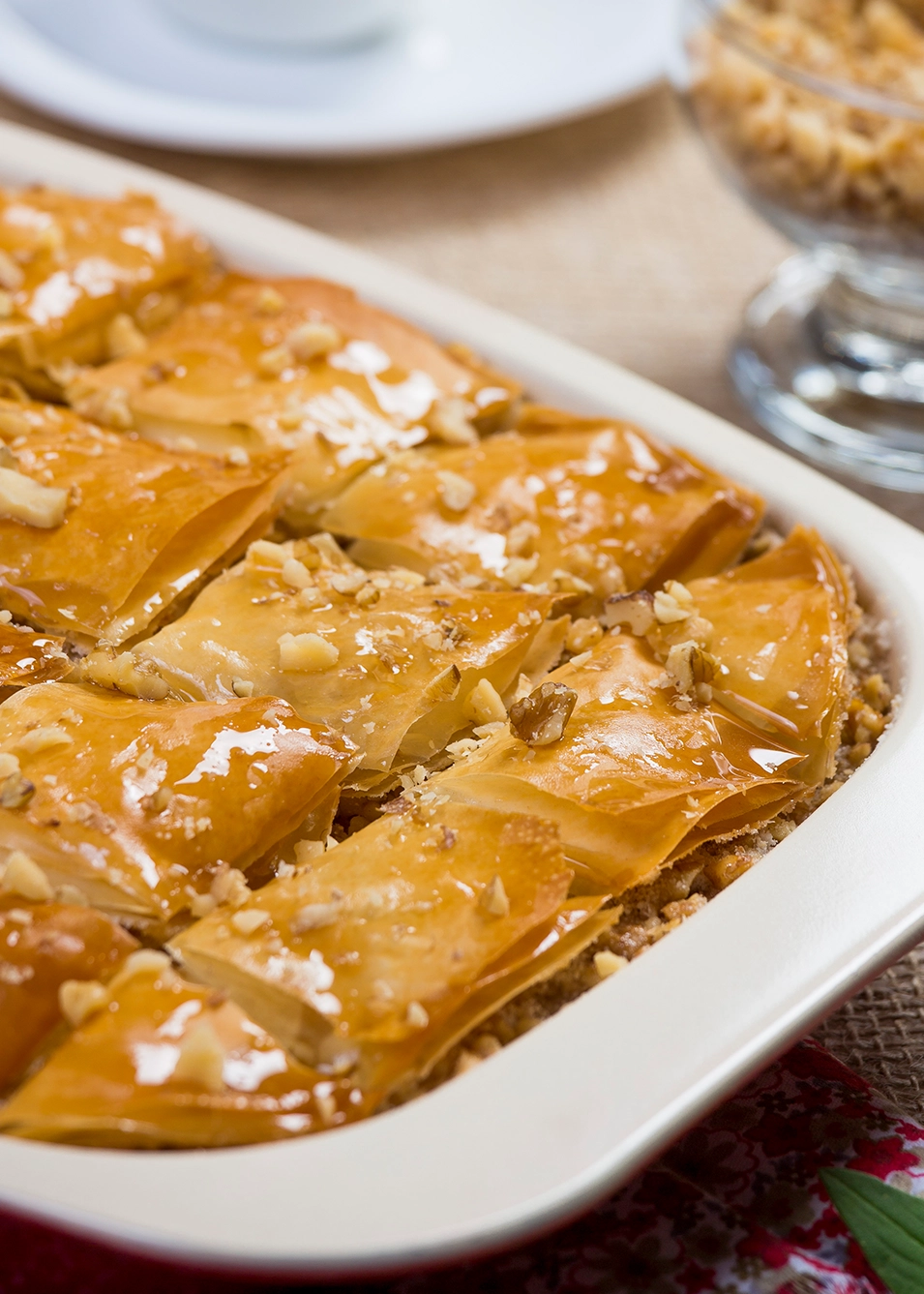
Baklava bliss is more than a dessert; it’s a crunchy‑layered experience that balances buttery filo, fragrant nuts, and a syrup that glistens like amber. The magic begins with the paper‑thin sheets of filo dough, each one contributing a delicate crisp that holds up against generous fillings. When the layers bake together, they form a mosaic of texture that’s both airy and satisfyingly dense.
Because the pastry is so light, the choice of nuts and spices takes center stage. Pistachios, walnuts, and almonds each lend a distinct flavor profile, while a hint of cardamom or orange blossom water adds an aromatic lift. The result? A bite that feels both familiar and adventurous—a true bliss for the palate.
Essential Ingredients for a Show‑Stopping Baklava
Filo sheets – Look for the freshest, vacuum‑sealed packs. They should be pliable but not sticky; a brief brush of melted butter on each sheet prevents tearing and creates that coveted golden crust.
Nuts – Toast the nuts lightly before grinding. Toasting releases oils that intensify flavor and prevents the filling from turning soggy.
Butter – Clarified butter (ghee) works best because the milk solids have been removed, reducing the risk of burning during the long bake.
Syrup – A simple mixture of sugar, water, honey, and a splash of lemon juice. Adding a sprig of cinnamon stick or a few cloves while simmering layers in subtle spice without overpowering the nuts.
Step‑by‑Step: Building the Layers
- Preheat the oven to 350°F (175°C) and grease a deep baking pan with butter.
- Lay down the first three sheets of filo, brushing each with melted butter before adding the next.
- Spread a thin layer of the nut mixture (about ¼ cup per 9‑inch pan).
- Repeat the process—three more sheets, butter, nuts—until you’ve used half the filo and nut mixture.
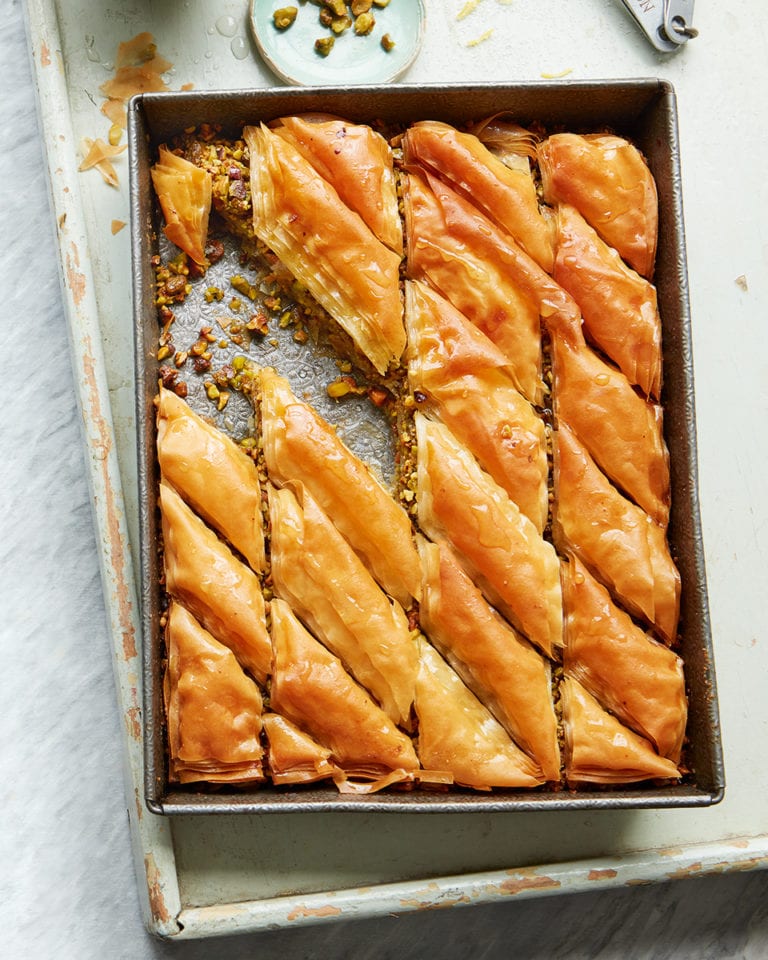
- For the top, stack the remaining sheets, brushing each, then cut the assembled baklava into diamond or square shapes before baking.
- Bake for 45‑55 minutes, until the top is deep golden and the edges crisp.
- While the baklava bakes, bring the syrup to a gentle boil, then let it cool slightly.
- Once out of the oven, pour the warm syrup over the hot baklava, allowing it to soak evenly.
The key is timing: the syrup should be warm but not boiling when it meets the hot pastry. This ensures the layers absorb the liquid without becoming soggy, preserving that coveted crunch.
Creative Twists on Traditional Baklava
If you’re looking to push baklava beyond the classic, consider these variations:
- Chocolate‑Hazelnut: Substitute half the pistachios with toasted hazelnuts and drizzle a dark chocolate ganache over the finished baklava.
- Citrus‑Infused: Add zest of lemon or orange to the syrup and sprinkle a pinch of dried lavender between the nut layers for a fresh, floral note.
- Vegan Friendly: Use coconut oil in place of butter and swap honey for agave syrup. The texture remains just as flaky.
- Mini Baklava Bites: Cut the assembled sheets into 2‑inch squares before baking; perfect for cocktail parties or dessert buffets.
These adaptations keep the spirit of baklava alive while letting you tailor the flavor to seasonal produce or dietary preferences.
Storing and Serving Tips
Baklava improves after a day or two as the syrup continues to penetrate the layers. Transfer the cooled pieces to an airtight container and store at room temperature for up to a week. For longer storage, freeze in a single layer, then wrap tightly; they’ll keep for three months and thaw beautifully.
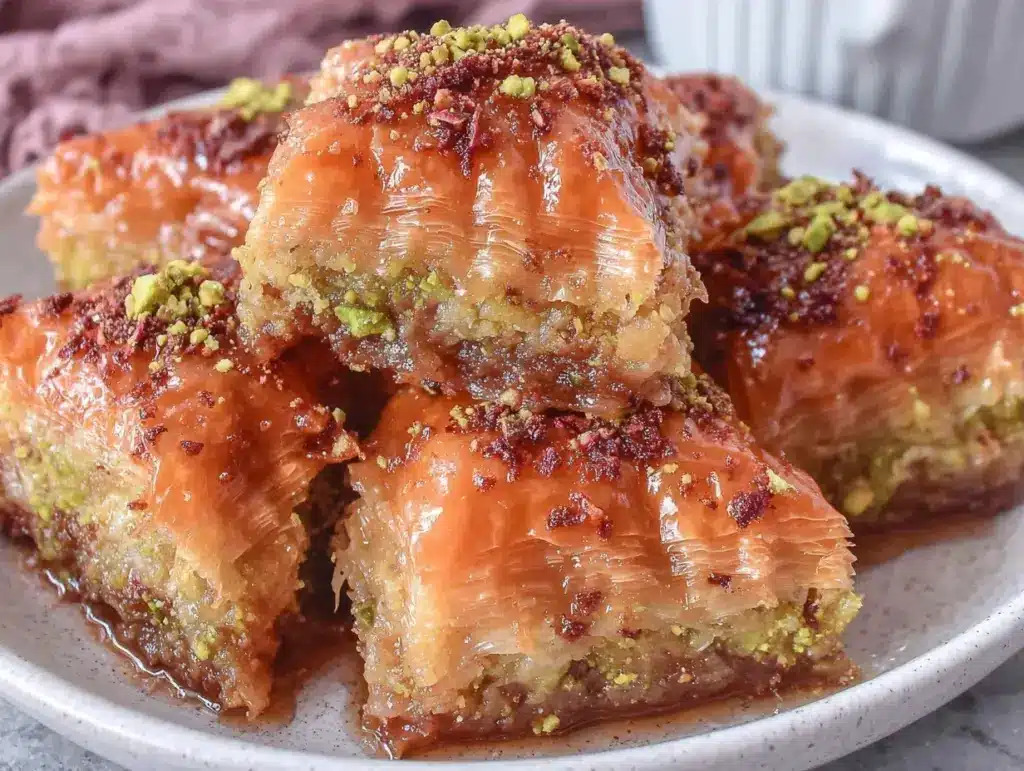
When serving, a dollop of lightly sweetened whipped cream or a scoop of vanilla ice cream provides a pleasant temperature contrast. A sprinkle of crushed pistachios on top adds visual flair and a final burst of buttery nuttiness.
Frequently Asked Questions
Can I make baklava with phyllo substitutes?
Yes. Thin sheets of puff pastry can work in a pinch, though they’ll yield a slightly puffier texture. Brush each layer well to prevent sogginess.
How do I prevent the filo from drying out while I’m assembling?
Cover the stack of filo with a damp kitchen towel. The moisture keeps the sheets supple, making them easier to handle without tearing.
Is it necessary to use clarified butter?
While regular melted butter will do, clarified butter reduces the chance of brown spots and gives a cleaner flavor, especially during a long bake.
What’s the ideal syrup consistency?
Aim for a thin, honey‑like consistency. If the syrup is too thick, it won’t seep into the layers; too thin, and the baklava may become soggy.