Channel Capacity Explained: A Practical Guide to Data Transmission
What Is Channel Capacity?
When engineers talk about how much information a communication link can carry, they’re referring to its channel capacity. In plain terms, it’s the maximum data rate—measured in bits per second—that can be transmitted reliably over a given medium, be it a copper wire, fiber optic cable, or radio wave.
The concept was formalized by Claude Shannon in 1948, and it remains the benchmark for designing everything from cellular networks to deep‑space probes.
The Shannon‑Hartley Formula
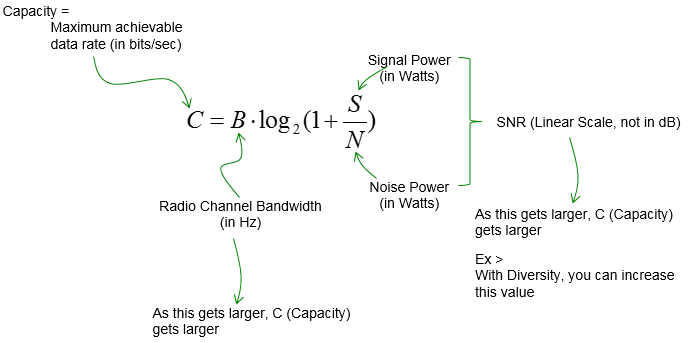
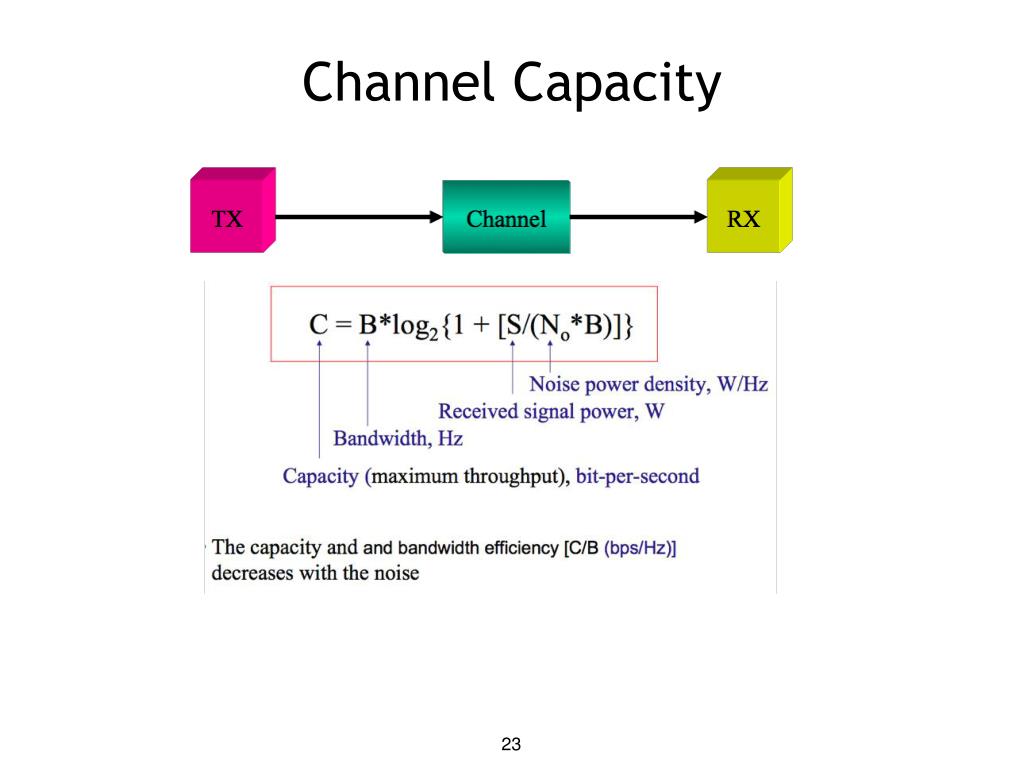
Shannon showed that capacity (C) depends on two key factors: bandwidth (B) and signal‑to‑noise ratio (SNR). The classic expression is:
C = B · log₂(1 + S/N)
Here, B is the range of frequencies the channel can support, and S/N is the power of the intended signal divided by the power of background noise. The logarithm base 2 reflects the binary nature of digital data.
What the equation tells us is intuitive: double the bandwidth or improve the SNR, and you boost the theoretical ceiling for data throughput.
Bandwidth vs. Data Rate: Clearing the Confusion
Many people conflate “bandwidth” with “speed.” In reality, bandwidth is a property of the physical medium—the width of the frequency band allocated for transmission. Data rate, on the other hand, is how fast you actually move bits across that band, which can be limited by noise, interference, and the modulation scheme you choose.
For instance, a 20 MHz Wi‑Fi channel can theoretically support up to 86 Mbps under ideal conditions (using the Shannon‑Hartley limit), but real‑world devices often achieve only a fraction of that due to protocol overhead and environmental factors.
Signal‑to‑Noise Ratio: The Quiet Game
SNR measures how clean the received signal is compared to background chatter. A higher ratio means the receiver can more easily distinguish the intended bits from random fluctuations. In practice, improving SNR can involve boosting transmit power, using better antennas, or employing error‑correcting codes that tolerate more noise.
However, simply cranking up power isn’t always feasible—regulatory limits and energy efficiency concerns keep designers on a tightrope.
Practical Limits in Different Media
Copper cables are constrained by resistance and electromagnetic interference. Typical Ethernet over twisted pair tops out at 10 Gbps for short runs, even though the theoretical capacity of the 100 MHz bandwidth is higher.
Fiber optics enjoy massive bandwidth—hundreds of gigahertz—allowing terabit‑per‑second links when paired with sophisticated modulation like DP‑QPSK or DP‑16QAM. Yet fiber still faces practical limits from dispersion and the quality of the lasers used.
Wireless channels are the most fickle. Multipath fading, weather, and competing users can all erode SNR. That’s why cellular standards such as 5G rely heavily on techniques like massive MIMO (multiple‑input, multiple‑output) to create spatial streams that effectively multiply capacity without widening the frequency band.
Techniques to Push Capacity Higher
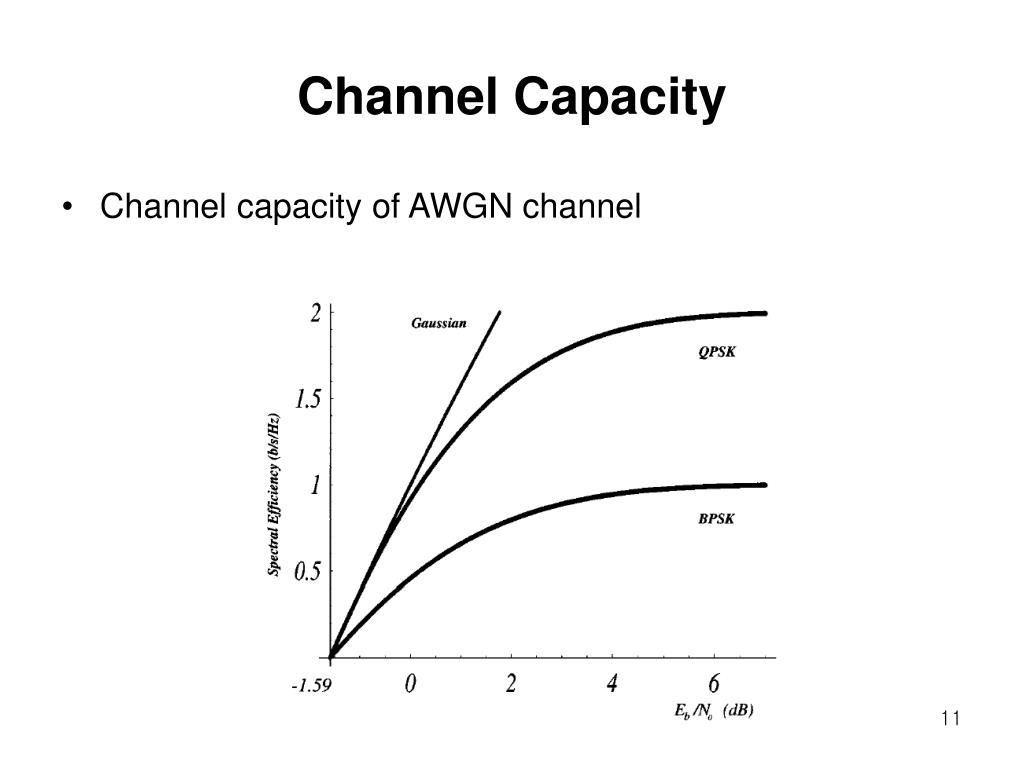
- Advanced Modulation: Moving from binary phase‑shift keying (BPSK) to 256‑QAM squeezes more bits into each symbol, raising the data rate at the cost of requiring a higher SNR.
- MIMO: By using multiple antennas at both transmitter and receiver, the channel becomes a matrix of parallel sub‑channels, each contributing its own capacity.
- Channel Coding: Error‑correcting codes like LDPC or Turbo codes add redundancy that helps the receiver recover data even when noise is present, effectively allowing operation closer to the Shannon limit.
- Frequency Reuse: In cellular networks, the same frequency band is reused in non‑adjacent cells, multiplying the overall system capacity while keeping each individual link within its own bandwidth constraints.
Why Real‑World Systems Rarely Hit the Shannon Limit
Shannon’s bound is an ideal—achievable only with infinitely long codewords and perfect decoding. Practical systems must balance latency, computational complexity, and power consumption, so they settle for a fraction of the theoretical maximum.
For example, modern Wi‑Fi (802.11ax) typically reaches 70‑80 % of the Shannon limit under laboratory conditions, but everyday usage in crowded apartments often falls well below that due to interference and protocol overhead.
Designing for Future Capacity Needs
As data consumption skyrockets, engineers look beyond raw bandwidth. One emerging direction is optical wireless communication (Li‑Fi), which uses visible light to transmit data, offering gigahertz‑wide channels in indoor environments.
Another frontier is terahertz (THz) communication, where frequencies above 300 GHz promise enormous bandwidths—but the challenge lies in maintaining a usable SNR at those extreme frequencies.
Regardless of the medium, the fundamental lesson remains: to increase channel capacity, you must either widen the usable bandwidth, improve the signal‑to‑noise ratio, or adopt smarter ways to encode information.
Frequently Asked Questions
How does channel capacity differ from throughput?
Channel capacity is the theoretical upper bound on data rate under ideal conditions. Throughput is the actual rate achieved after accounting for protocol overhead, retransmissions, and real‑world impairments.
Can I increase capacity simply by adding more bandwidth?
Adding bandwidth raises the ceiling, but only if the SNR stays high enough. In noisy environments, the extra spectrum may go unused, making other strategies—like better coding or antenna arrays—more effective.
What role does latency play in channel capacity?
Shannon’s formula assumes infinitely long codewords, which would introduce unacceptable delay. Practical systems use shorter codes to keep latency low, which in turn reduces how close they can get to the theoretical capacity.
Is there a point where increasing power no longer helps?
Yes. Beyond a certain level, additional transmit power yields diminishing returns because noise and interference also increase, and regulatory limits often cap permissible power levels.