Broca's Area: Unlocking The Secrets Of Speech
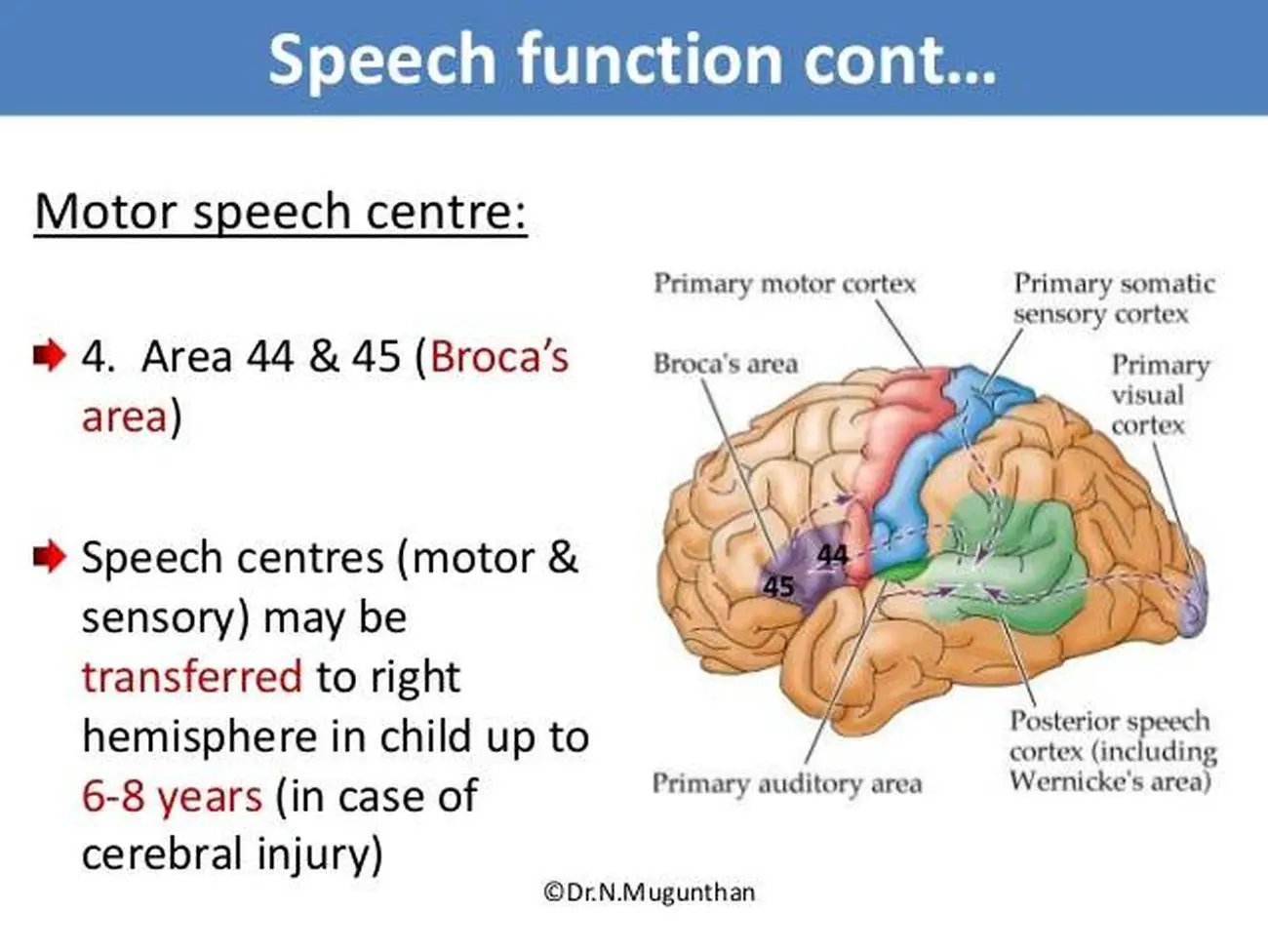
Have you ever tried to say something specific, only to have the words slip away at the last second? You know exactly what you mean, you can hear the sentence in your head, but your mouth refuses to cooperate. That frustrating disconnect points directly to a tiny, walnut-sized region in your brain known as Broca’s area.
For centuries, this cluster of neurons was viewed through a narrow lens: it was simply the "speech center." Modern neuroscience has since dismantled that simplistic view. While Broca’s area remains central to our ability to communicate, its role is far more complex than just pushing air through our vocal cords. It is actually a sophisticated hub for syntax, movement planning, and even social cognition.
From Autopsy to Anatomy
The story of Broca’s area begins in 1861, in a small town in France. Paul Broca, a surgeon and anatomist, is best known for his work with a patient named Louis Leborgne. Locals called him "Tan" because that was the only sound he could produce, despite being fully aware and intelligent.
When Leborgne died, Broca performed an autopsy. He found a lesion in the left hemisphere of the frontal lobe specifically. This was a landmark moment. For the first time, scientists had concrete evidence that specific brain functions were localized to specific areas. It shattered the prevailing theory that the brain worked as a uniform, undifferentiated whole.
However, early interpretations were overly reductive. For decades, textbooks taught that Broca’s area was solely responsible for speech production. If it was damaged, you lost the ability to speak. If it was intact, you could speak. While damage there certainly causes aphasia (a language disorder), the reality is much more nuanced.
More Than Just Talking
Here is where things get interesting. People with severe damage to Broca’s area often lose the ability to produce fluent, grammatical speech. They might struggle to form complex sentences, dropping small words like "the" or "is." This is known as agrammatism. But they usually understand language perfectly well. They can laugh at jokes, follow complex instructions, and recognize emotions when they listen to others.
This distinction is crucial. Understanding language primarily happens in Wernicke’s area, located further back in the temporal lobe. Broca’s area is less about the meaning of words and more about the structure and mechanics of putting them together. It handles the grammar, the syntax, and the sequencing.
Think of it like driving a car. Wernicke’s area is the destination you want to reach. Broca’s area is the engine, the gears, and the steering wheel. You need both to get where you’re going, but they do very different jobs.
The Motor Connection
Perhaps the most fascinating recent discovery is that Broca’s area doesn’t just control your tongue and lips. It works closely with the front part of the motor cortex, which controls voluntary movement throughout the body.
Neuroscientists have found that this same region lights up when people mimic facial expressions or interpret gestures. Some researchers suggest that Broca’s area evolved from a region originally responsible for hand gestures. As human communication shifted from pointing and waving to speaking, the brain repurposed this existing motor hub.
This explains why signing and speaking share similar neural pathways. When a deaf person uses American Sign Language, Broca’s area is just as active as it is when a hearing person speaks. It treats sign language with the same structural complexity, proving that the brain cares about the logic of communication, not just the sound.
Syntax and the Hierarchy of Thought
Why do we need a specific area for syntax? Why can’t we just rattle off words in any order? The answer lies in efficiency and clarity. Language allows us to express infinite ideas using a finite set of rules. Broca’s area is the executive director of those rules.
It manages the hierarchical structure of sentences. For example, consider the difference between "The man who Bit the dog bit the mailman" and "The dog bit the mailman." The first sentence requires holding multiple concepts in working memory and nesting them correctly. Broca’s area orchestrates this mental stacking.
Without this hierarchical processing, our thoughts would remain fragmented. We might be able to name objects, but we wouldn’t be able to argue, plan, or tell stories. The ability to combine concepts is what allows human language to be distinctively human.
Rehabilitation and Resilience
Understanding the true function of Broca’s area has revolutionized speech therapy. Since we now know it’s not just a "speech box" but a motor-planning and syntax hub, treatments focus on retraining those specific skills.
Therapists often use techniques like Melodic Intonation Therapy, which leverages the right hemisphere’s musical processing to help patients bypass damaged left-hemisphere speech pathways. Other methods focus heavily on gesture integration, tapping into the motor origins of the region.
The brain is remarkably plastic. In many stroke victims, surrounding healthy tissue can learn to take over some of Broca’s functions. This plasticity is strongest in children, which is why young kids recover from brain injuries so much faster than adults. But even in older adults, the right consistency and targeted exercises can rewire these connections.
The Future of Speech Research
We are still uncovering the depths of Broca’s area. Recent studies are looking at its role in empathy and theory of mind. It seems active when we try to understand what someone else is thinking or feeling, suggesting that language and social connection are deeply intertwined at a neural level.
As imaging technology improves, we may discover that Broca’s area is part of a larger network rather than an isolated unit. It communicates constantly with other parts of the brain, integrating sound, movement, vision, and emotion into the seamless experience of human interaction.
So the next time you stumble over your words, remember: it’s not just a glitch. It’s a testament to the incredible, complex machinery working behind the scenes to let you connect with the world.
Frequently Asked Questions
- Where exactly is Broca’s area located?
It is typically found in the left hemisphere of the brain, specifically in the frontal lobe, within an area called the inferior frontal gyrus. - What happens if Broca’s area is damaged?
Damage often results in expressive aphasia, also known as Broca’s aphasia. Individuals may struggle to form complete sentences, speak in short, telegraphic phrases, and have difficulty with grammar, though their comprehension usually remains intact. - Can Broca’s area control sign language?
Yes. Neuroimaging studies show that Broca’s area is active during sign language production and perception, just as it is during spoken language. This supports the idea that it processes the syntactic structure of language regardless of the medium. - Is Broca’s area only for humans?
While the specific area as defined in humans is unique, homologous regions exist in other primates. However, the size and connectivity of Broca’s area in humans are significantly more developed, correlating with our advanced language capabilities.